Every major ad platform is chasing the same dollars. But when you strip away the surface metrics, only two companies have built the infrastructure to convert attention into advertiser ROI at large scale: Meta Platforms (META) and Alphabet (GOOGL).
|
Key Points
|
Both are Magnificent 7 names. Both generate hundreds of billions in revenue. Both are aggressively investing in AI. The question for investors is not whether these businesses are good. It is which one is structurally better positioned and what the data actually shows.
Through StockOracle™, we can compare them side by side across the dimensions that matter: profitability, financial strength, moat, and the AI capital race that is reshaping both businesses.
Meta Platforms (META) and Alphabet (GOOGL) OracleIQ™ comparison powered by StockOracle™ - April 2025
Find Out What does META's & GOOGL's OracleIQ™ Means For Free
The Margin Gap: Meta's Structural Advantage
The most striking difference between these two businesses shows up immediately in the margins.
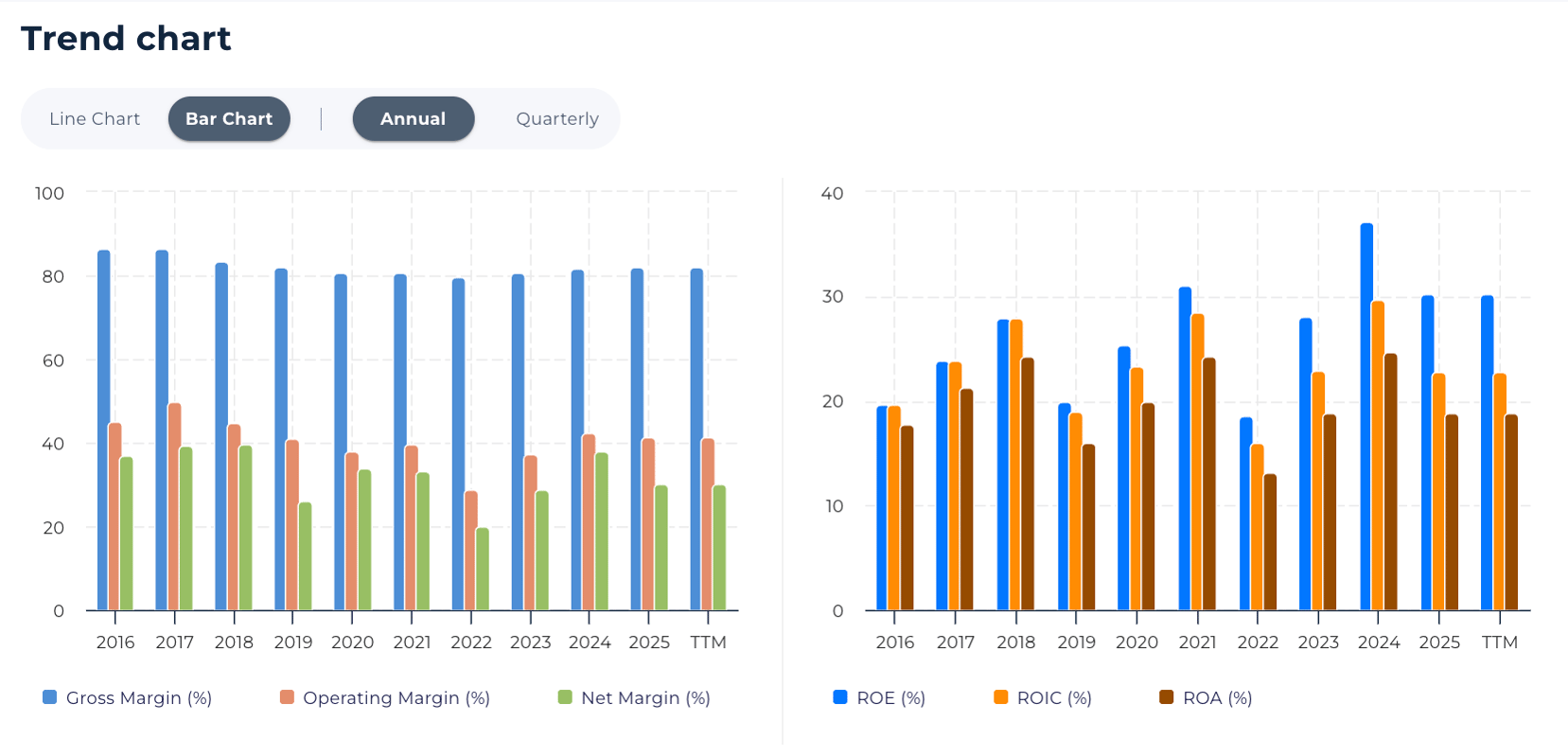
Meta Platforms (META) Margins and Returns Trend Chart powered by StockOracle™ - 23 April 2025
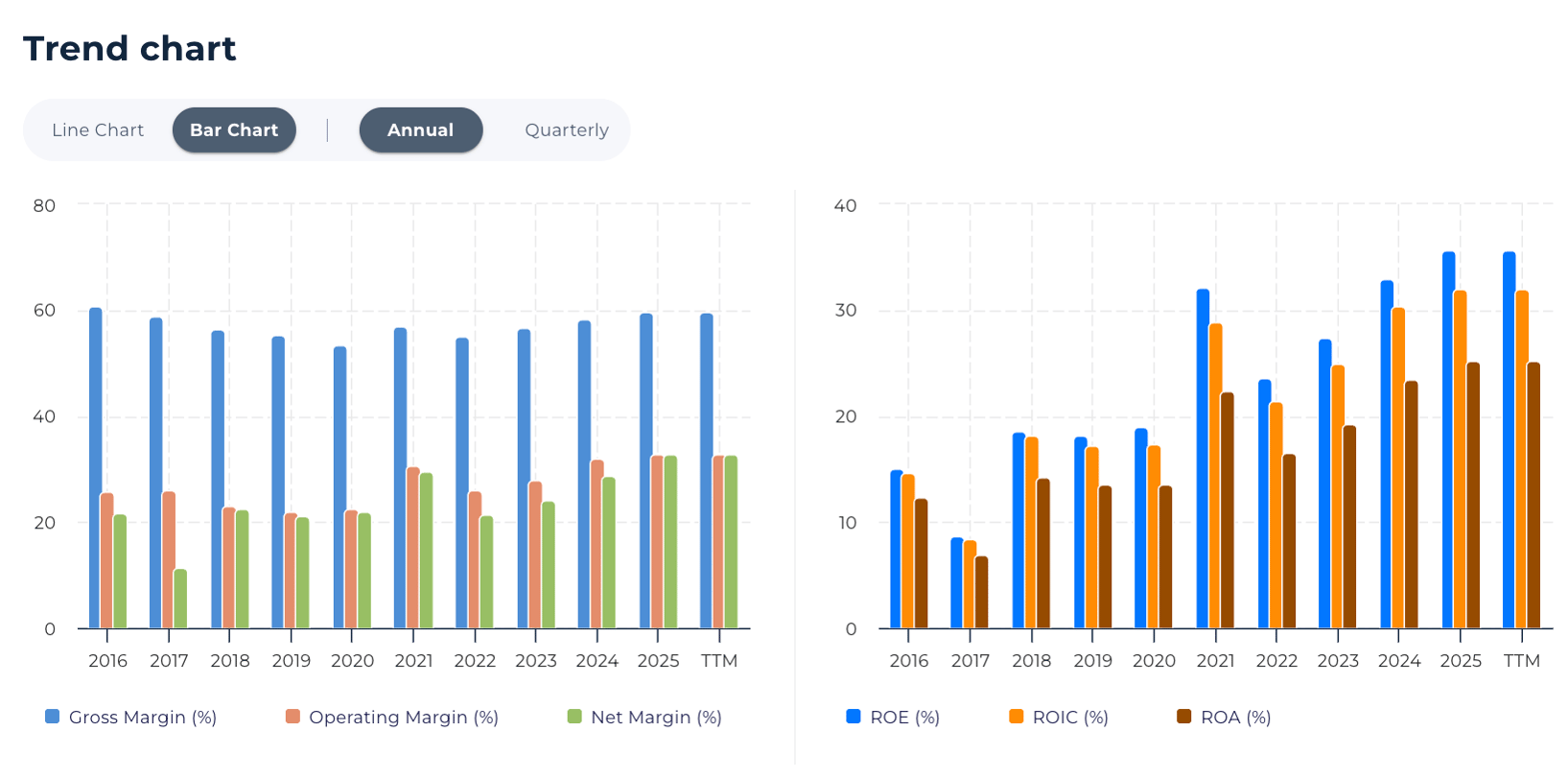
Alphabet (GOOGL) Margins and Returns Trend Chart powered by StockOracle™ - April 2025
Meta runs a structurally leaner business. Gross margins above 80% have held consistently since 2016, with operating margins near 40–45% and net margins around 30% TTM. Alphabet, by contrast, operates at gross margins of 57–60%, a meaningful gap driven by the cost of running Google Cloud infrastructure and other hardware commitments.
On returns, both companies have converged in recent years. Meta's ROE reached approximately 35% in 2024, with ROIC near 25% reflecting capital efficiency from a business that generates cash faster than it can deploy it. Alphabet's returns have followed a similar upward trajectory, with ROE and ROIC both approaching 30–35% TTM, helped by the maturing margin profile of Google Cloud.
The key distinction: Meta's higher margins are structural. Alphabet's improving margins are partly cyclical, driven by cost discipline and cloud mix shift. For investors, that difference matters when thinking about durability.
Revenue Scale and Business Mix
Alphabet operates at nearly double Meta's revenue scale, approximately $400 billion TTM versus Meta's $200 billion TTM.
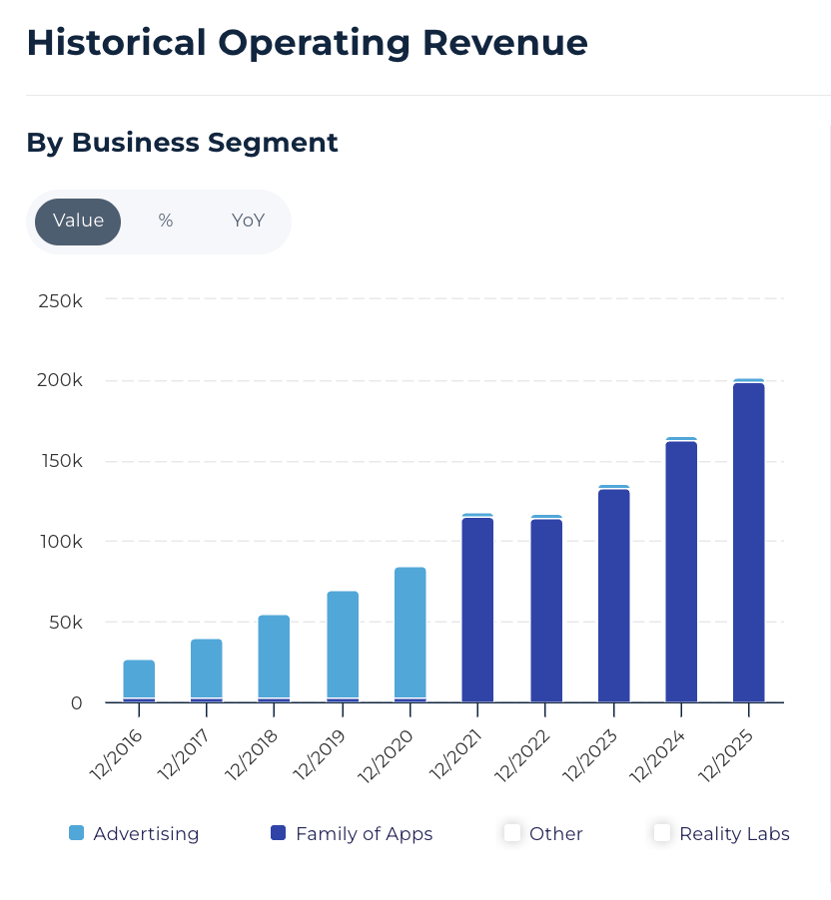
Meta's revenue is almost entirely advertising, flowing through the Family of Apps. That concentration is both a strength and a risk, but it also means every dollar of incremental revenue drops through at a very high margin.
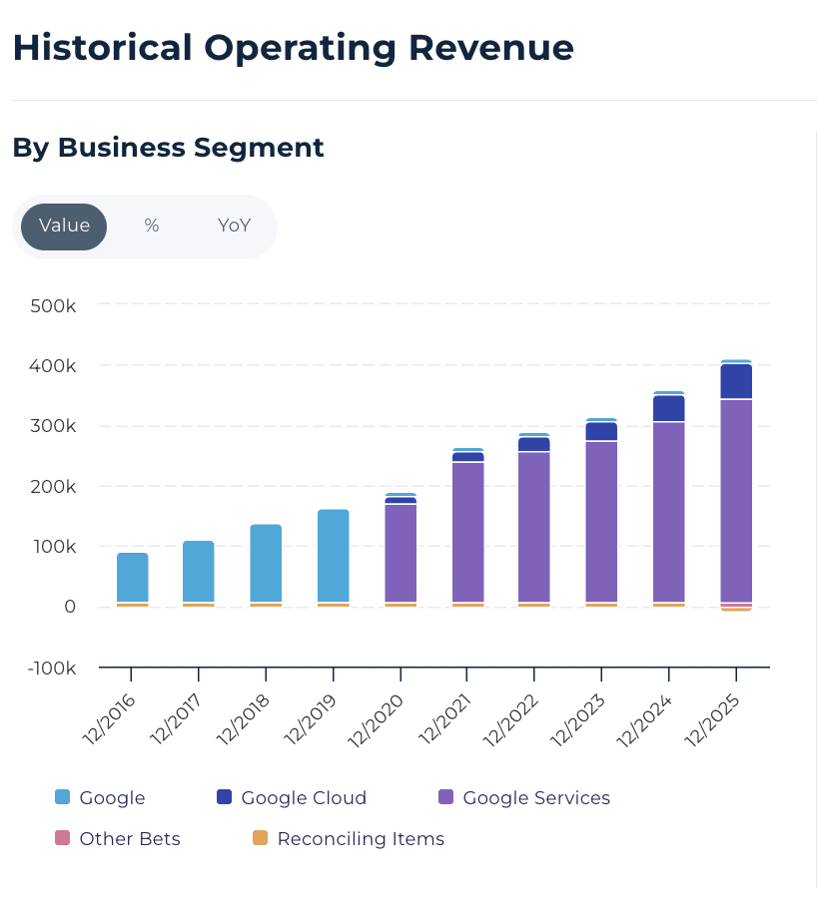
Alphabet is a little more diversified: Google Services anchors the business, but Google Cloud is a fast-growing second engine, adding both revenue and a more durable B2B revenue stream that Meta does not have.
Geographically, both companies are well-distributed globally, with Alphabet's international diversification being broader, with EMEA and APAC representing a larger share of the total. Meta's revenue skews more heavily toward the US and Europe, where ARPU is highest.
Average Revenue Per User (ARPU) is the total revenue divided by the number of users, telling you how much money the business extracts from each customer on average.
Financial Strength: Two Different Kinds of Strong
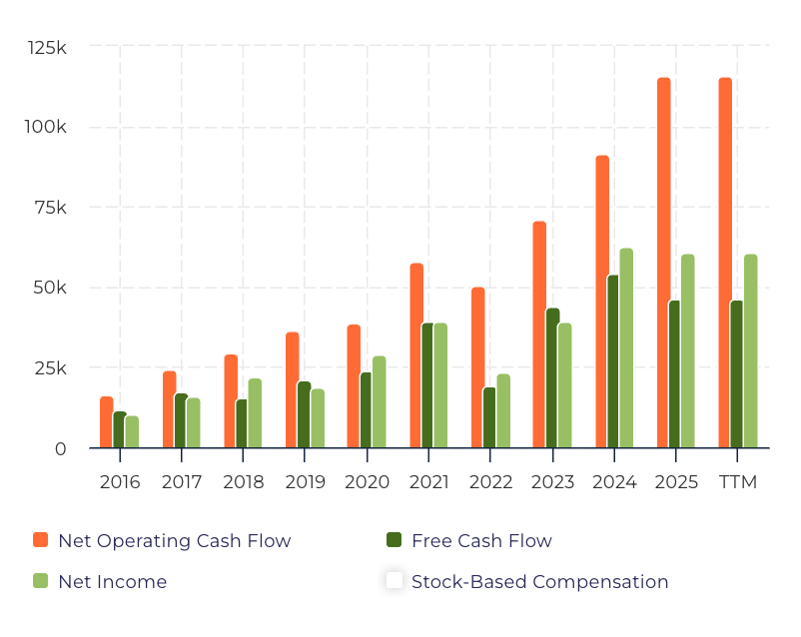
Meta Platforms (META) Financials Trend Chart powered by StockOracle™ - April 2025
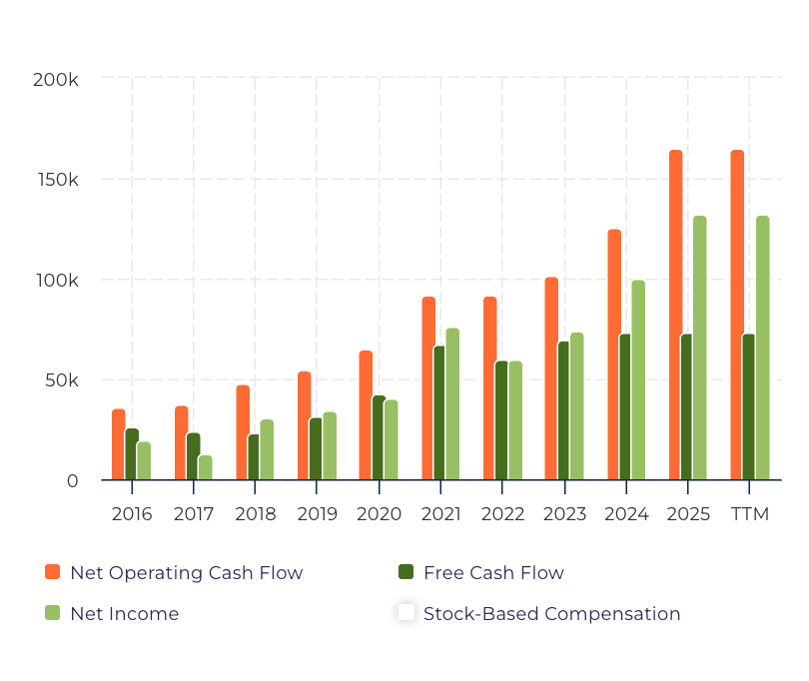
Alphabet (GOOGL) Financials Trend Chart powered by StockOracle™ - April 2025
Both companies generate extraordinary free cash flow, but the balance sheet profiles differ in one meaningful way.
Meta carries approximately $85 billion in debt against $82 billion in cash, a roughly neutral net cash position. Alphabet sits on a fortress balance sheet: $125–130 billion in cash and short-term investments against relatively modest debt of around $67 billion. That cash pile gives Alphabet more flexibility for M&A, buybacks, and absorbing regulatory shocks.
In both cases, the free cash flow engine funds AI infrastructure investment without requiring external capital, a critical advantage over smaller platform competitors.
Any past performance mentioned is not indicative of future results.
The AI Capital Race: Who Is Spending More?
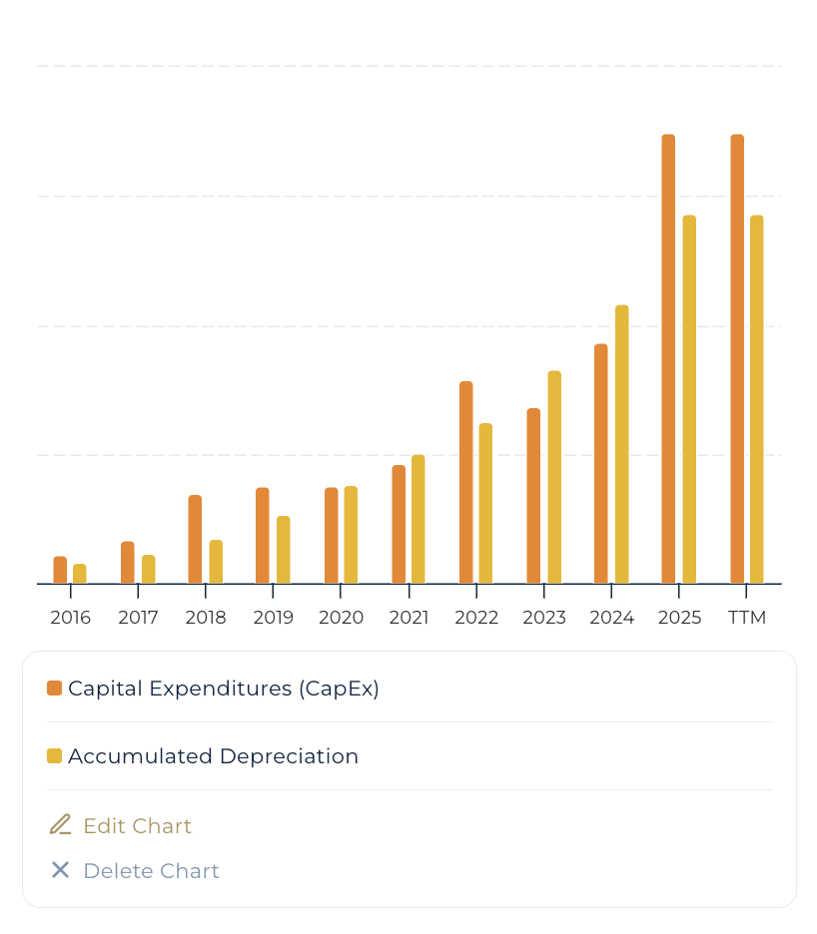 Meta Platforms (META) Capital Expenditures powered by StockOracle™ - April 2025
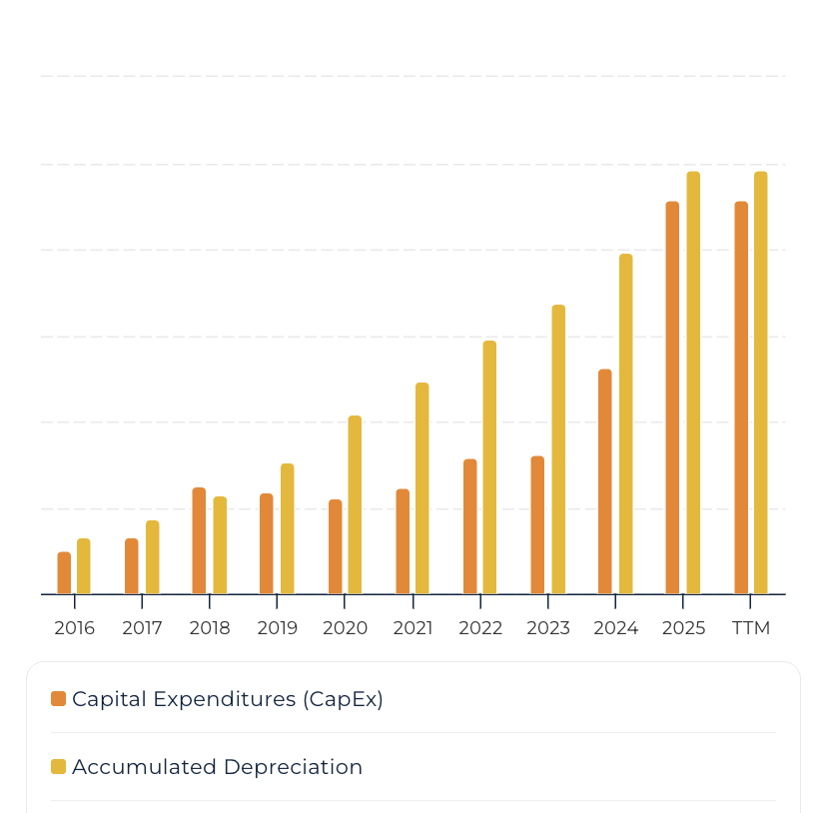
Alphabet (GOOGL) Capital Expenditures powered by StockOracle™ - April 2025
Both companies have dramatically accelerated CapEx from 2023 onwards. Alphabet's CapEx ramp is slightly earlier and larger in absolute terms reflecting the scale of Google Cloud data center buildouts and custom TPU infrastructure. Meta's CapEx acceleration is steeper proportionally, reflecting its move from a relatively asset-light social platform to a company building its own AI compute stack from scratch.
The critical difference: Alphabet's AI infrastructure is dual-purpose, it serves both its ad business and Google Cloud customers, allowing the cost to be amortized across two revenue streams. Meta's AI investment flows almost entirely back into ad targeting and recommendation quality. Both strategies are rational. But Alphabet's infrastructure has a commercial monetization path beyond advertising that Meta currently lacks.

Final Thoughts
Viewed through the StockOracle™ lens, both META and GOOGL represent the same category of business: dominant, highly profitable, wide-moat ad platforms investing aggressively in AI. The differences are at the margin — but for investors, those margins matter.
Meta seems to be the cleaner, higher-margin business with a more focused model and a monetisation flywheel that is currently running at full speed. Alphabet is the larger, more diversified business with a stronger balance sheet, a second revenue engine in Google Cloud, and a deeper infrastructure moat.
This analysis is shared for educational purposes. It is not intended as financial advice or a recommendation on any investment.
OracleValue™ is an estimate and should not be taken as a recommendation or a signal to buy or sell stocks.