6 mins read
On 18 November, Palo Alto Networks closed up nearly 10% while the S&P 500 fell, after the US Homeland Security Secretary warned of a rise in AI-powered cyberattacks. After the US market closed that day, the company reported its fiscal first quarter of 2027. Revenue was up 39% to $3.44 billion, yet GAAP operating income was down to $96 million from $309 million a year earlier.
YTD PANW is also up around 89%.
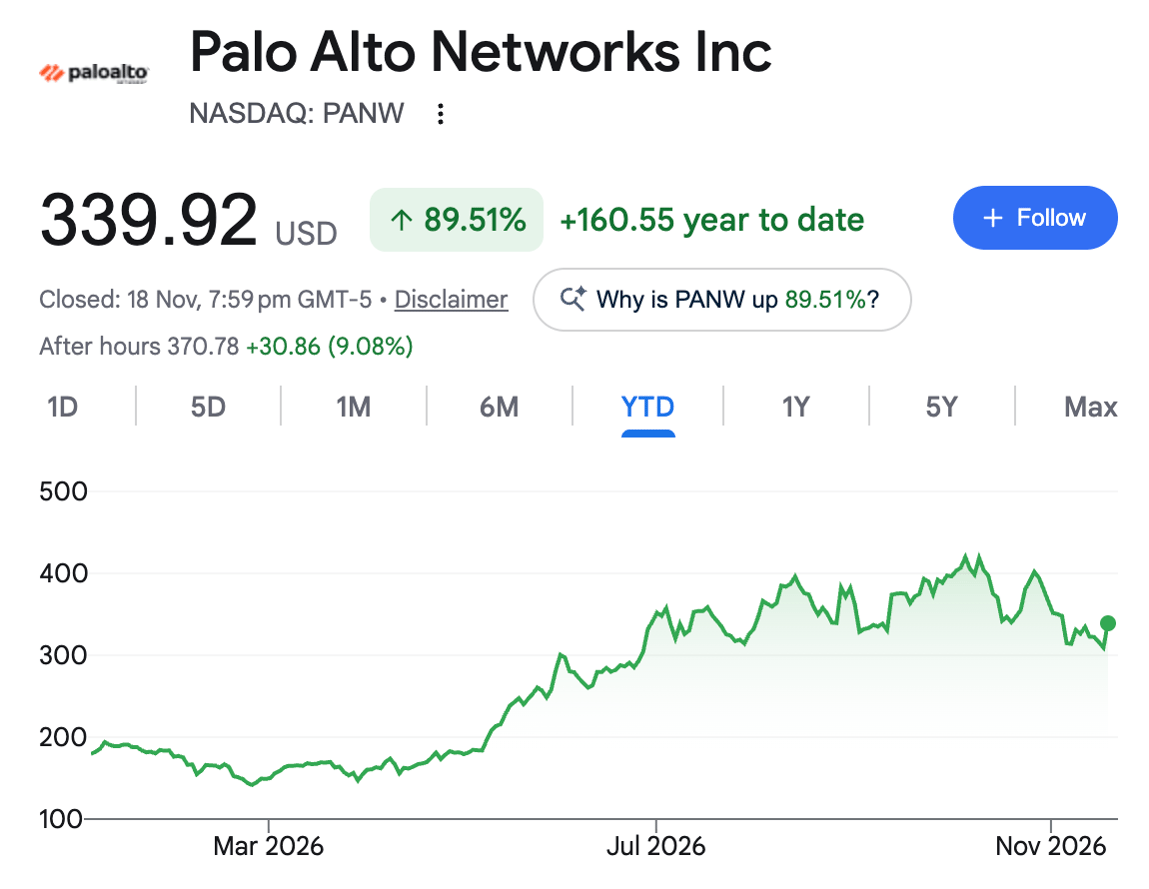
Cybersecurity has somewhat rallying alongside AI, and that optimism raises a fair question for any investor working out PANW intrinsic value: is Palo Alto one of the stronger names in the sector, and how much of that strength is the share price already assuming?
What Is Palo Alto Networks' Intrinsic Value, and How Do You Calculate PANW Fair Value?
For Palo Alto, most of the job is separating what the business earns from what two large acquisitions have done to its accounts.
The company sells network firewalls, cloud and security-operations software, and, since buying CyberArk in February 2026, identity security. Most of that revenue is now recurring subscriptions.
Discounted Cash Flow 20-year model (DCF-20) starts from operating cash flow, grows it through three stages (Years 1–5, 6–10 and 11–20), discounts it back to today, adjusts for cash and debt, and divides by shares outstanding. The default growth rates are analyst projections sourced through FactSet, so the result is only as good as those estimates, and your own assumptions will move it up or down.
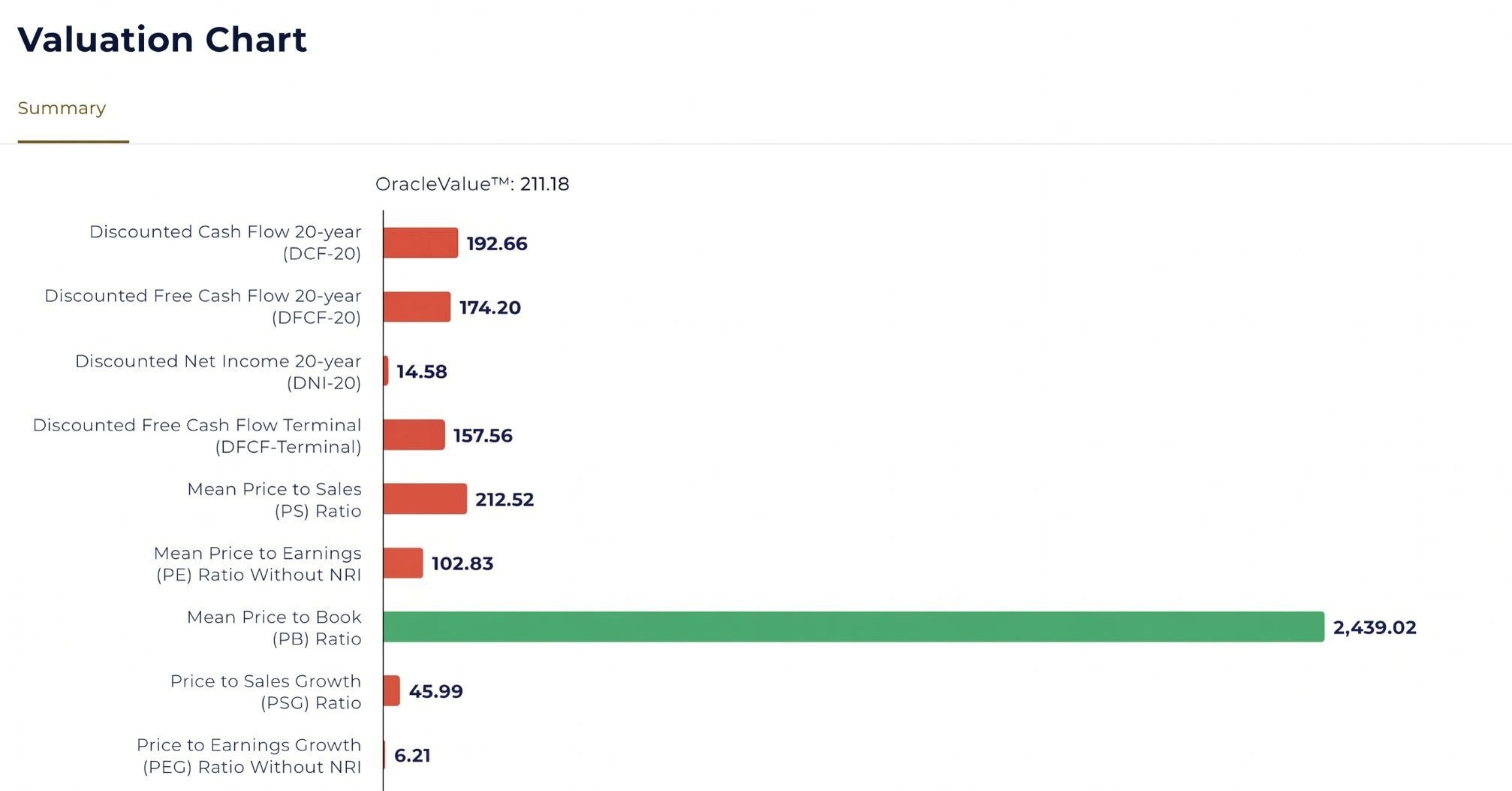
PANW Valuation Chart — Model Breakdown — Powered by StockOracle™ · Accurate as of 18 November 2026
The chart shows two camps. The cash-flow models and the price-to-sales model sit in one cluster, while the earnings-based models (discounted net income, price-to-earnings and PEG) sit far lower.
The cause is purchase accounting. Buying CyberArk and Chronosphere brought amortisation of acquired intangibles, acquisition costs, and replacement share awards onto the income statement, which hollowed out GAAP earnings while the cash coming in held up. Any model built on trailing net income reads Palo Alto as a fraction of the business the cash-flow models see.
That is also why a rally driven by threat headlines can't settle the valuation. The bullish reading is that AI-driven attacks make security spending less discretionary and the acceleration looks earned. The bearish reading is that a fear-driven re-rating pulled future demand into today's price, and acquisitions are flattering the growth figures. With both still open, no single intrinsic value stands out, and a day like 18 November can look more like buy first, ask questions later.
So how many years of accelerating cash-flow growth is today's share price quietly assuming?
PANW Financial Performance
Earnings can be shaped by accounting choices. Free cash flow is the cash that actually moves through the business. So let's take a look at PANW's revenue and the other numbers that lead to its free cash flow.
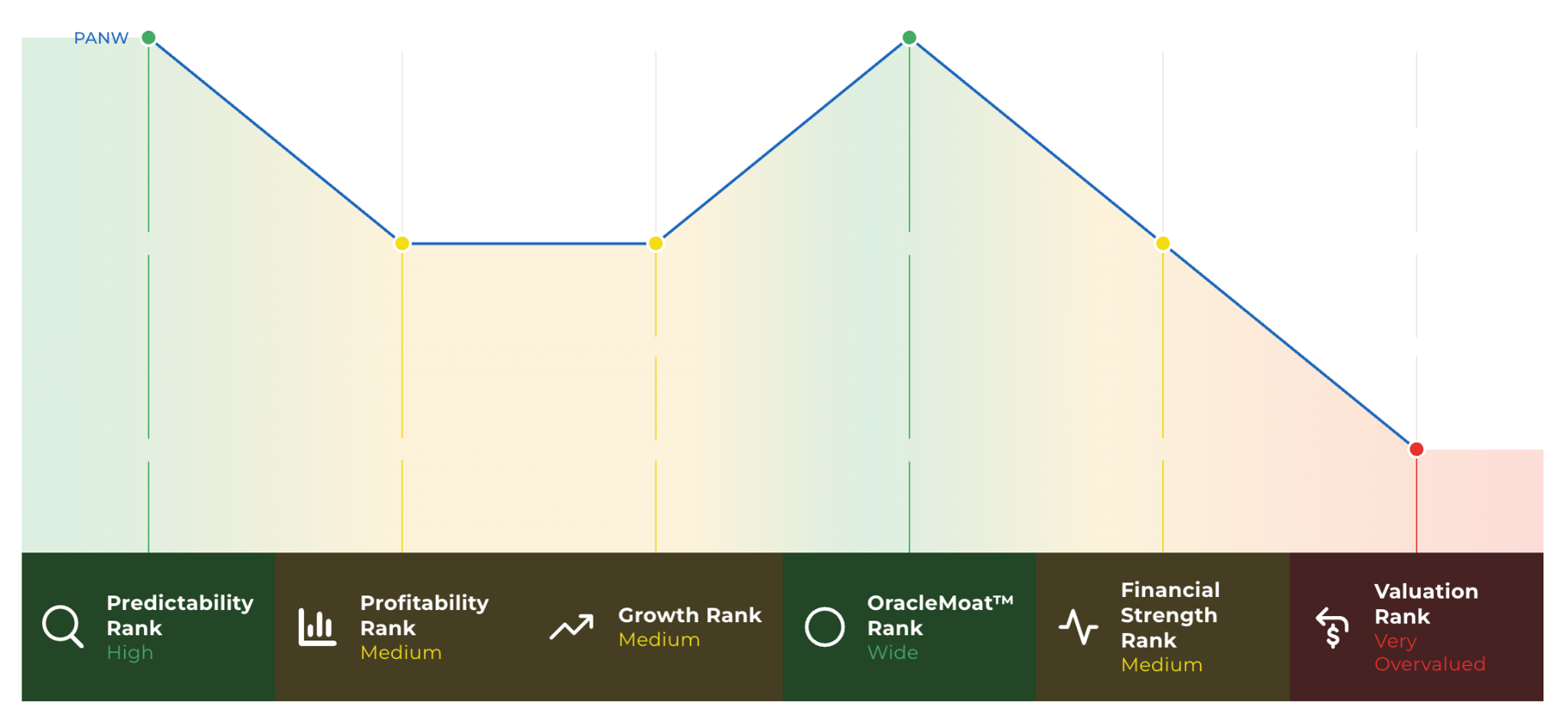
OracleIQ™ rates Palo Alto High on Predictability and Medium on Profitability, Growth and Financial Strength.
PANW Revenue
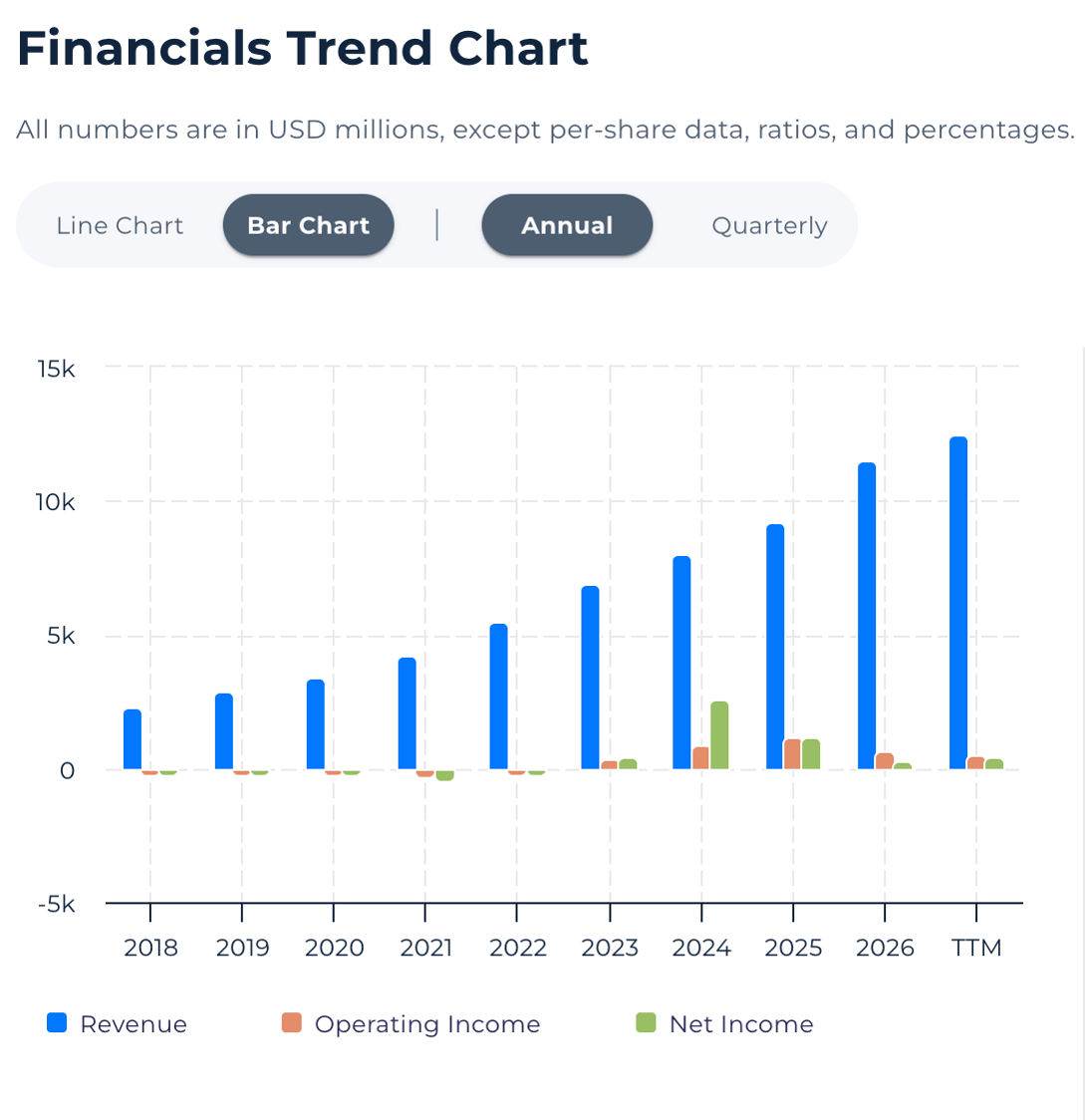
PANW Revenue Trend — Powered by StockOracle™ · Accurate as of 18 November 2026
Revenue for fiscal 2026 reached $11.48 billion, up 24%. Part of that, and more of the first quarter's 39%, comes from the acquired businesses rather than organic demand, which helps explain why OracleIQ™ rates Growth Medium despite headline numbers that look much stronger. The cleaner read on organic growth comes once the comparisons lap the CyberArk closing.
PANW Free Cash Flow
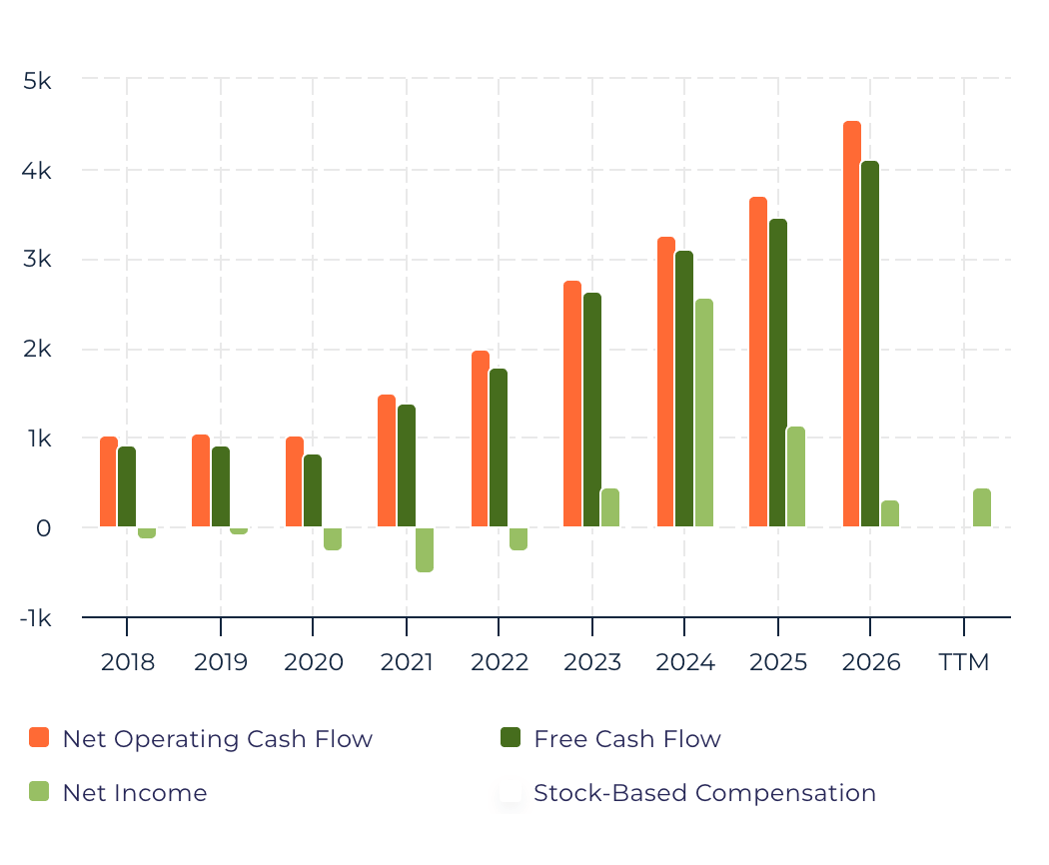
Operating Cash Flow and Free Cash Flow Chart — Powered by StockOracle™ · Accurate as of 18 November 2026
Palo Alto converts about 36 cents of every revenue dollar into free cash flow (a 35.83% margin), in line with its five-year average.
That consistency is where the High Predictability rank shows up. Management is targeting a 40% adjusted free cash flow margin in fiscal 2028. Because the DCF-20 starts from cash rather than earnings, this is the line that keeps the cash-flow models well above the earnings-based ones.
PANW Earnings Versus Cash
GAAP operating margin fell from 12.43% in fiscal 2025 to 5.42% on a trailing basis, and return on invested capital sits at just 1.61%, which is why OracleIQ™ rates Profitability Medium. Most of the gap is non-cash, but not all of it is free: share-based compensation is paid in stock, and the share count has risen sharply as Palo Alto used its shares to fund acquisitions. Dilution is the real cost hiding behind a strong cash-flow margin.
PANW Balance Sheet
OracleIQ™ rates Financial Strength Medium. Cash and short-term investments of about $3.1 billion exceed total debt of about $1.8 billion, and debt is below one year of EBITDA. The Medium rank likely reflects a current ratio below one, common for subscription businesses that collect cash upfront, and the goodwill the deals added, rather than any strain on repayments.
PANW Growth Catalysts
While PANW scores Medium on its OracleIQ™ Growth rank, it is important to know what the catalysts are and what needs to keep working for it to earn a higher one:
- Next-Generation Security ARR grew 66% to $9.73 billion in the quarter to 31 October 2026
- Remaining performance obligations, contracted revenue not yet recognised, grew 35% to $21.0 billion
- Fiscal 2027 revenue guidance was raised to 14.52–14.57 billion, or 26–27% growth
- Management's fiscal 2030 target is $20 billion of Next-Generation Security ARR
- A $4.5 billion deal for Applied Compute aims to add secure open-weight AI models to the platform
These are the kind of evidence the Years 6–10 acceleration needs to keep showing up. Because the first quarter still includes months of acquired revenue that last year's comparison lacks, the quarters after the CyberArk anniversary will say more about whether that acceleration is organic.

PANW Economic Moat
OracleIQ™ gives Palo Alto a Wide OracleMoat™ rank. StockOracle™'s AI Moat, an AI-generated assessment, scores it 8/10 overall, with its highest marks (8/10 each) for barriers to entry and switching costs. The first comes from threat intelligence fed by telemetry across a very large installed base; the second from the retraining, policy rebuilds, and security gaps a customer risks when ripping out a firewall estate mid-contract.
The rivals it has to defend against each hold a different edge.
CrowdStrike has a single-agent endpoint platform already sitting on millions of devices.
Fortinet designs its own security chips, giving its hardware firewalls a price-performance advantage.
Microsoft can bundle security into enterprise licences customers already pay for.
Zscaler was built as a cloud-native proxy for zero-trust access.
Two of those rivals may soon be one. November 2026, Bloomberg reported that CrowdStrike is in talks to acquire Zscaler, a deal that would rank among the largest the cybersecurity industry has seen. If a deal does happen, it would put endpoint protection and zero-trust network access under one roof. That is the same "one platform" pitch Palo Alto has spent years building, and could become a more formidable rival to Palo Alto. Palo Alto has already been through several years of platform integration, and that head start could possibly count for more if its biggest rivals start consolidating.
Building Your Own PANW Fair-Value Estimate
The DCF-20's biggest assumption is that cash-flow growth speeds up in Years 6–10 rather than slowing. That is the lever worth testing against your own view of the AI-security cycle.
If you believe AI-driven threats keep security budgets growing for years, keep Years 6–10 where it is, or test raising Years 1–5 toward the pace management is guiding. If you see the November rally as fear-driven and expect growth to normalise once the acquisitions are lapped, test tapering Years 6–10 below the Years 1–5 rate. While you are in the calculator, check the shares outstanding field against the latest diluted count, since acquisitions have added stock.
Compare each scenario with the current share price as a range, not a single target.
Growth rates are estimates, not forecasts. Your inputs shape the answer.
Run your own assumptions through a free StockOracle™ trial
Final Thoughts on Palo Alto Networks' Intrinsic Value
Palo Alto's valuation splits along the line between cash and earnings. The cash-flow models see a business converting a large share of revenue into cash, while the earnings-based models see little left after the acquisition charges.
The rally adds a second layer. Threat headlines can lift every cybersecurity stock on the same afternoon, and investors appear to be pricing the sector as a whole as much as any one company within it. Palo Alto's Wide moat and High Predictability suggest it sits among the stronger names, but strength and price are separate questions.
Which camp proves right will depend on whether cash-flow growth keeps accelerating once the acquired revenue is in the base, and whether that growth stays ahead of the shares issued to buy it. If organic demand carries through, the cash-flow view holds up; if the fear premium fades and growth settles, even the more generous models may be assuming too much.