Ralph Lauren beat Wall Street's estimates on November 5, raised its full-year outlook for the second time this fiscal year, and grew Asia revenue 28%.
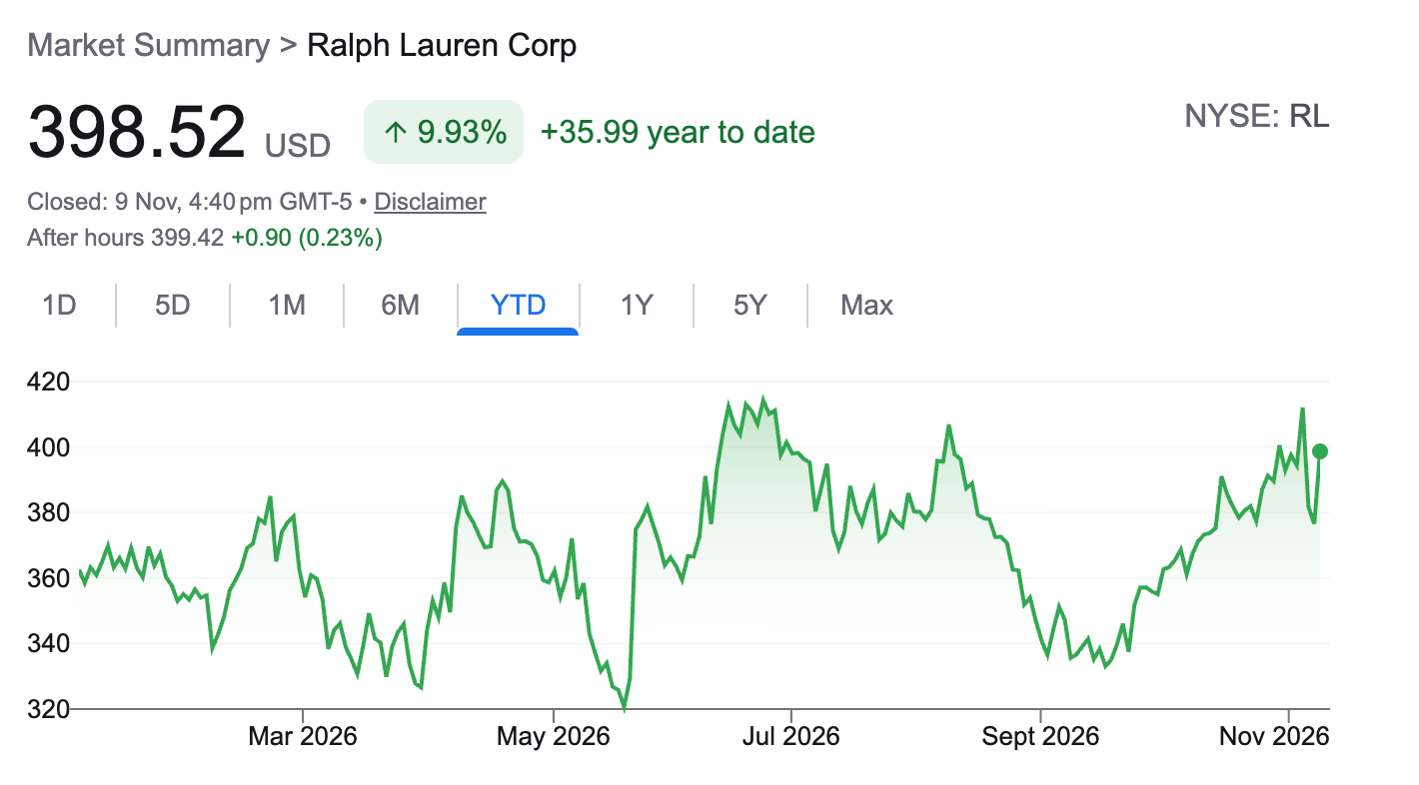
However, Ralph Lauren stock still fell 5.5% to $390.00 right after the release, as next quarter's growth guidance came in light and European store sales slipped.
So when the business keeps beating, and the stock keeps wobbling, what is really telling the truth about Ralph Lauren's intrinsic value?
What Does Ralph Lauren Do?
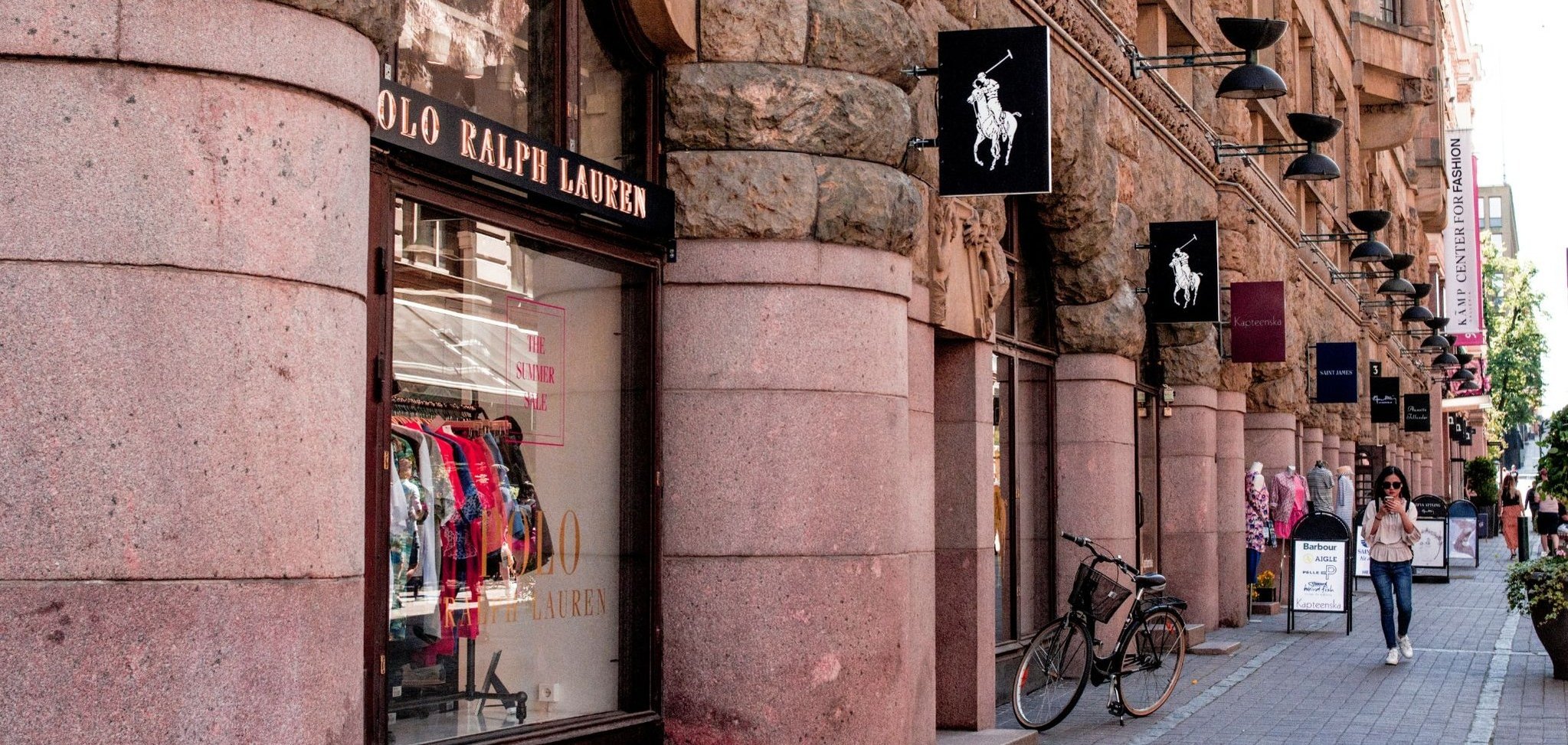
Ralph Lauren Corporation designs and sells premium apparel, accessories, home goods, and fragrances.
Founded by Ralph Lauren in New York City in 1967, it runs brands including Polo Ralph Lauren, Ralph Lauren Purple Label, Ralph Lauren Collection, Double RL, and Lauren Ralph Lauren.
It sells through its own stores and websites, through department stores and other wholesale partners, and through licensing deals.
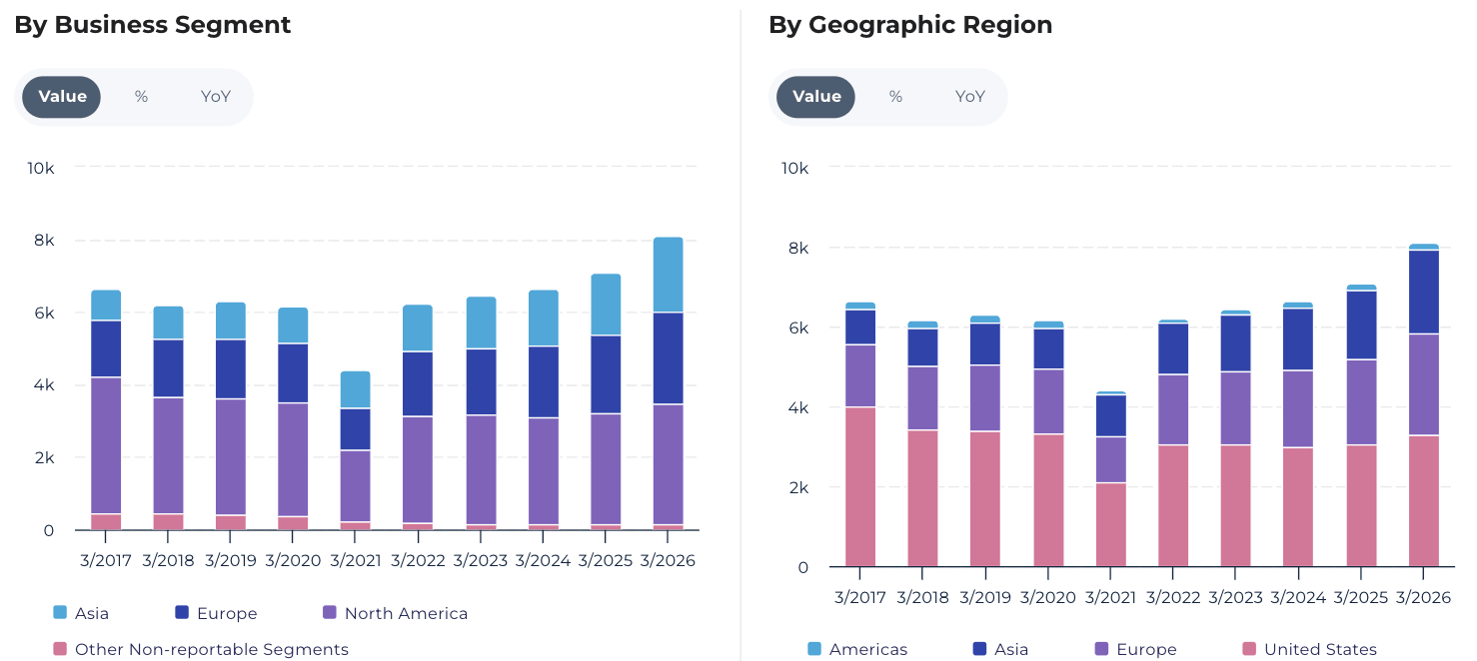
In fiscal 2026, North America brought in $3.33 billion, Europe $2.54 billion, and Asia $2.10 billion of total revenue of $8.11 billion, per the company's fiscal 2026 results.
Is Ralph Lauren Publicly Traded?
Yes. Ralph Lauren became a public company on the New York Stock Exchange on June 12, 1997, and its Class A shares trade under the ticker RL.
As of October 30, 2026, there were about 37.2 million Class A and 21.9 million Class B shares outstanding, per its latest 10-Q.
The company’s Class B shares are not publicly traded.
That dual-class structure matters for investors. Public shareholders own the economics of the business, but the founder's Class B stake gives him outsized influence over the board.
Ralph Lauren Intrinsic Value: What Is Ralph Lauren Stock Worth?
Intrinsic value is an estimate of what a business is worth based on the cash and profit it can produce over time, not the price the market quotes on a given day. The gap between that estimate and the share price is the investor's margin of safety.
Ralph Lauren Stock Valuation: Nine Models, One Wide Spread
RL Valuation Chart Powered by StockOracle™
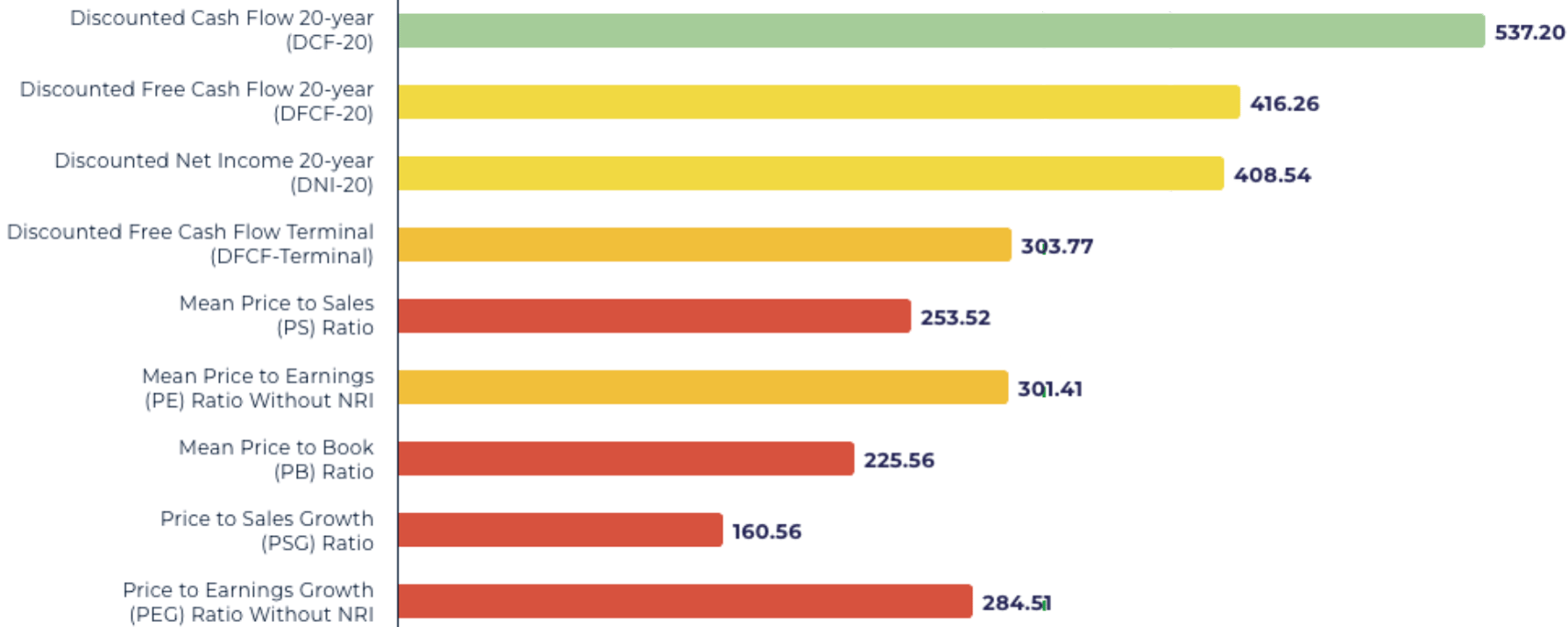
StockOracle™ runs nine valuation models on Ralph Lauren, with a range from $160.56 to $537.20 per share.
That spread shows how much the estimate of Ralph Lauren's intrinsic value depends on which part of the business a model chooses to evaluate.
The models fall into two groups:
-
Cash flow and earnings models (higher):
Discounted Cash Flow 20-year (DCF-20) $537.20, Discounted Free Cash Flow 20-year (DFCF-20) $416.26, Discounted Net Income 20-year (DNI-20) $408.54
-
Multiple-based models (lower):
Mean P/E $301.41, PEG $284.51, Mean P/S $253.52, Mean P/B $225.56, PSG $160.56
Projected Revenue Trend Powered by StockOracle™
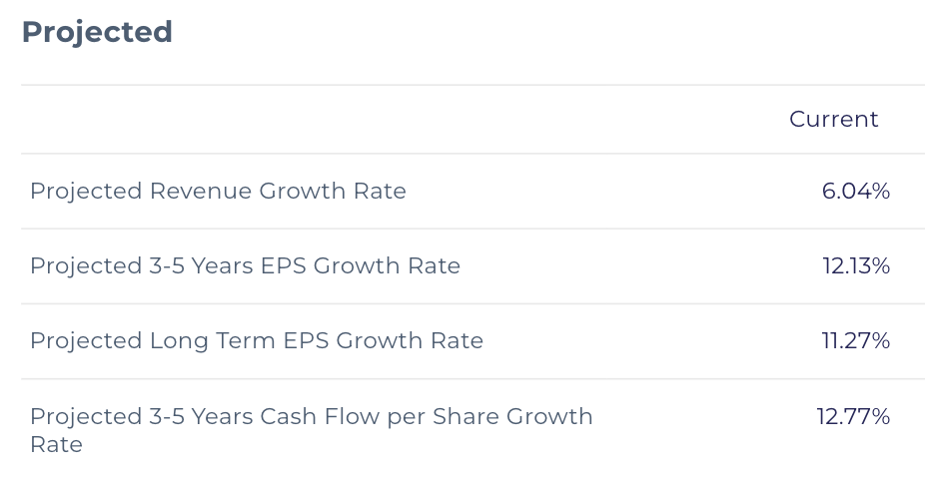
The cash flow group projects Ralph Lauren's recent profit growth forward for 20 years.
The multiples group anchors to the valuation ratios the stock carried in the past, when the company earned thinner margins. And depending on which model you choose to look at RL, they each tell a different story.
Why DCF-20 Sits at the Top, and PSG Sits at the Bottom
The two outliers are measuring different things, and Ralph Lauren's recent history pulls them in opposite directions.
DCF-20 tends to be higher for Ralph Lauren case because it counts cash before capital spending.
The DCF-20 model is anchored to total operating cash flow, which was $1.15 billion in fiscal 2026.
The DFCF-20 model uses free cash flow instead, which subtracts capital spending. That subtraction got much larger this year, as capital expenditure nearly doubled to $408 million from $216 million in fiscal 2025.
DCF-20 effectively gives Ralph Lauren full credit for the cash it is reinvesting in stores and systems, assuming that spending pays off.
However, PSG may not be the best model to use for Ralph Lauren intrinsic value because Ralph Lauren's growth tends to come from margins, not entirely sales volume.
The Price-to-Sales Growth (PSG) model divides the price-to-sales ratio by the company's sales growth rate.
Ralph Lauren's revenue grew at a five-year annualized rate of 8.8%, while its earnings per share grew at 21.3% a year over the same period.
The PSG model misses the higher prices, fuller-price selling and share buybacks that turned single-digit sales growth into double-digit earnings growth. It treats Ralph Lauren like an apparel company growing sales at a modest pace.
Whereas the DCF-20 model treats it like a luxury brand that converts more of every sale into cash each year. So the model that investors use to evaluate any business matters as much as the outcome of the exercise.

Is Ralph Lauren Doing Well Financially?
According to most operating measures, it is.
Revenue and earnings per share reached new highs in fiscal 2026, and the first half of fiscal 2027 has extended that run. The weaker spots are in cash conversion and in Europe. Let's go in deeper.
Revenue Growth: Price and Asia Are Doing the Heavy Lifting
RL Revenue Trend Powered by StockOracle™
RL Historical Operating Revenue by Region Powered by StockOracle™
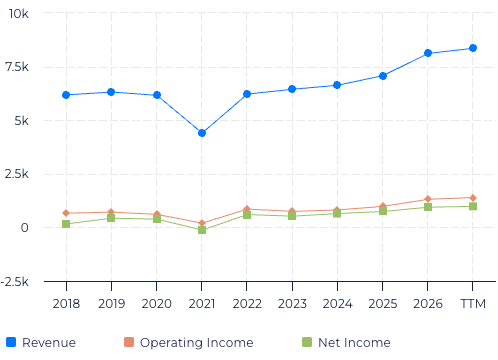
Ralph Lauren crossed $8 billion in annual revenue for the first time in fiscal 2026, up 14.6% reported and 11.8% in constant currency.
In the second quarter of fiscal 2027(the three months ended September 26, 2026), revenue rose 9% to $2.2 billion, ahead of the $2.13 billion analysts expected.
But the mix of where the growth is coming from matters because it shows how lasting that growth is likely to be.
North America and Europe still make up about 72% of revenue, and are mature markets where most customers already know the brand, so growth there is naturally slower.
Asia is where Ralph Lauren still has room to expand, and that runway is what supports the long-term growth assumptions in a 20-year cash flow model.
The trade-off would be concentration. When one region drives most of the new growth, a slowdown in Chinese consumer spending would pull the company’s overall growth down sharply.
In the second quarter, Asia revenue rose 28%, and China grew more than 35%, while North America rose 6% and Europe just 1%, according to the second-quarter fiscal 2027 release.
Average unit retail climbed 9% across its own stores and websites, so higher prices remain a major growth driver.
Margins: A Luxury Business Hiding in an Apparel Company
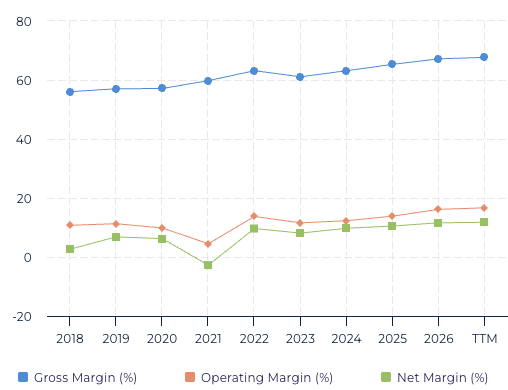
RL Margin Trend Powered by StockOracle™
Gross margin explains why the cash flow models read so high.
Ralph Lauren keeps roughly 70 cents of every sales dollar after the cost of making its products, which is 69.9% gross margin in fiscal 2026, a level closer to luxury houses than to mass-market apparel.
Adjusted gross margin reached 70.5% in the second quarter, up 250 basis points, and adjusted operating margin rose 160 basis points to 15.7%.
For fiscal 2026 as a whole, adjusted operating margin expanded 200 basis points to 16.0%, and adjusted EPS rose about 35% to $16.59.
But reported gross margin of 74.2% was boosted mainly by tariff refunds received in the period, per the company.
Free Cash Flow: Strong, but Thinner This Year
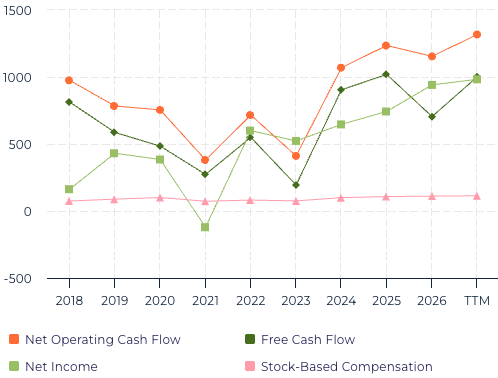
Operating Cash Flow and Free Cash Flow Chart Powered by StockOracle™
Free cash flow is the cash left after a business pays for everything it needs to run and grow, and it is the number a discounted cash flow model leans on most.
Ralph Lauren generated about $746 million of free cash flow in fiscal 2026, which is $1,154 million of operating cash flow less $408 million of capital spending, when calculated.
That is roughly 9 cents of free cash for every dollar of revenue, down from about 14 cents in fiscal 2025, when free cash flow was about $1.02 billion.
However, the drop came from heavier investment, not weaker operations.
The first half of fiscal 2027 shows a rebound with operating cash flow of $618 million and capital spending of $114 million, leaving about $504 million of free cash flow in six months.
Management expects capital spending to run at 4% to 5% of revenue this year.
Ralph Lauren Dividend Yield and Shareholder Returns
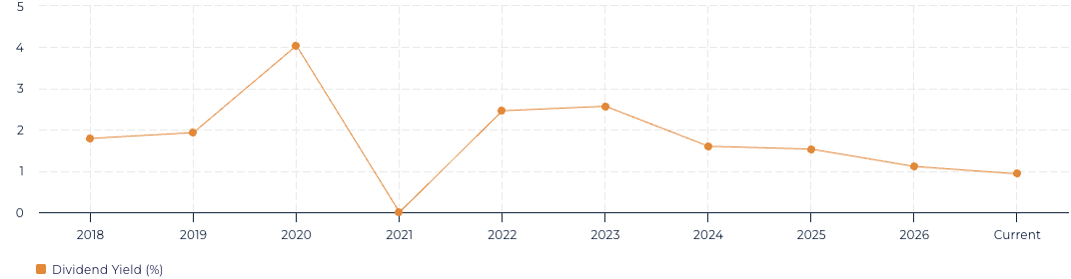
Dividend Yield Chart Powered by StockOracle™
Ralph Lauren pays a quarterly dividend. In May 2026, the board raised it about 10% to $1.00 per share, or $4.00 a year, following a similar increase to $0.9125 the year before.
At a share price near $390, that works out to a dividend yield of roughly 1.0%.
The dividend is well covered, with the $4.00 annual payout equaling about 24% of fiscal 2026 adjusted EPS of $16.59, and the $217 million paid in dividends used under a third of fiscal 2026 free cash flow.
For income-focused investors, Ralph Lauren could be seen as a dividend grower rather than a high-yield stock.
Buybacks are also a large part of the return. The company bought back about $500 million of Class A stock in fiscal 2026 and another $500 million in the first half of fiscal 2027, which it says completes this year's repurchase plans.
At its September 2025 Investor Day, it committed to return at least $2 billion to shareholders through fiscal 2028.
Each buyback means every remaining share owns a slightly larger piece of the company.
First-half dividends paid of $114 million and repurchases of $627 million, about $741 million in total, ran ahead of the $504 million of free cash flow, with the gap funded from the cash pile.
Is Ralph Lauren Stock a Buy? The Bull and Bear Case
Whether Ralph Lauren stock fits a portfolio depends on which set of assumptions an investor is willing to make.
The Bull Case
Average unit retail rose 9% in the second quarter while global comparable store sales rose 10%, so customers are paying more and still showing up.
- Asia is a second growth engine.
Asia revenue rose 28% and China rose more than 35% in the quarter, reducing reliance on North America and Europe.
- Guidance keeps rising.
Constant-currency revenue growth for fiscal 2027 started at about 4% to 5%, rose to 5% to 6% in August, and now sits at 6% to 7%, with operating margin expected to expand 80 to 100 basis points.
- The balance sheet is a cushion.
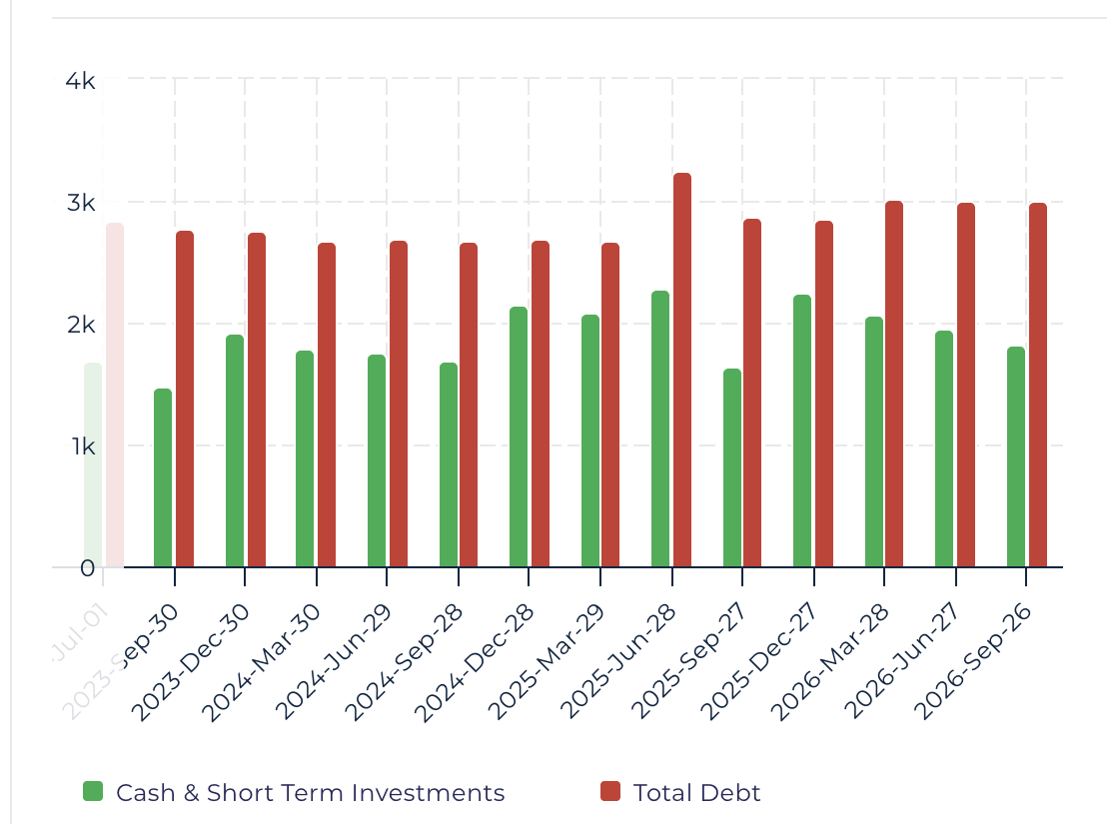
Ralph Lauren held about $1.8 billion in cash and short-term investments against $1.2 billion of debt (excluding store leases) at quarter-end, and inventory was down 9%.
- Brand reach is widening.
The company added 1.7 million new customers to its own stores and websites in the quarter.
The Bear Case
- Europe is cooling.
European comparable store sales fell 1% in the second quarter, with comparable sales in physical stores down 4%, and Europe revenue grew just 3% in constant currency.
- Next quarter looks slower.
Third-quarter revenue growth is guided at about 3% to 4% in constant currency, below the roughly 4.2% analysts had expected, per Reuters via SRN News. Management cited wholesale timing and fewer off-price sales.
- Price-led growth has limits.
Much of the growth comes from higher prices rather than more units sold, and price increases eventually meet customer resistance.
- Tariffs remain uncertain.
The company flags ongoing uncertainty about U.S. tariffs imposed under other trade authorities after the Supreme Court ruling against earlier tariffs, and the refunds that lifted this quarter's margin are unlikely to repeat.
- The stock already prices in a lot.
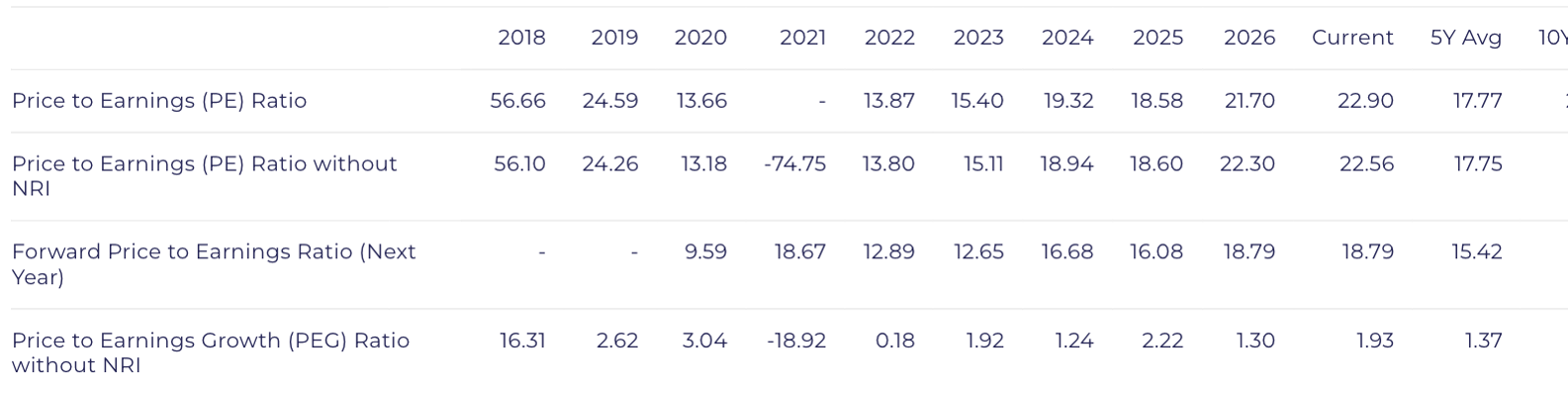
Price to Earnings Table Powered by StockOracle™
The stock was 23.1 times earnings in late October versus a 19.5x median for S&P 500 consumer discretionary companies.
If growth settles back toward the company's long-term mid-single-digit target, the multiple-based models between $225 and $305 in the chart above carry more weight.
Final Thoughts on Ralph Lauren's Intrinsic Value
- Ralph Lauren is publicly traded on the NYSE under the ticker RL, and has been since June 1997
- Fiscal 2026 revenue topped $8.1 billion, and adjusted EPS rose about 35% to $16.59
- StockOracle's nine models span $160.56 to $537.20, with cash flow models at the top and historical multiples at the bottom
- DCF-20 reads highest because it counts operating cash flow before a year of doubled capital spending, while PSG reads lowest because it sees modest sales growth and misses margin expansion
- The dividend of $4.00 a year yields roughly 1.0%, covered about four times by adjusted earnings (our calculations)
- Asia strength and rising guidance support the bull case, while softer European demand and a slower third-quarter guide support the bear case
Ralph Lauren is doing well financially by almost every measure in its latest results.
The open question for Ralph Lauren stock is how long its margin expansion can keep outrunning modest sales growth.
If pricing power and Asia growth hold, the cash flow models describe the company better than its old multiples do.
If Europe weakens further and growth slows to mid-single digits, the lower half of the range becomes harder to dismiss.