By Piranha Profits Team
Last updated on March 20, 2026
Salesforce (NYSE: CRM) experienced a nearly 10% post-earnings rally after announcing the strongest fiscal year in its history, which generated $41.5 billion in revenue for 2026. Showing slight recovery from the recent SaaS sell off.
|
Key Points
|
What is Salesforce’s intrinsic value?
The intrinsic value of a company represents its true economic worth, determined by projecting its future cash flows. When estimates of intrinsic value are higher than the market price, it suggests a good margin of safety.
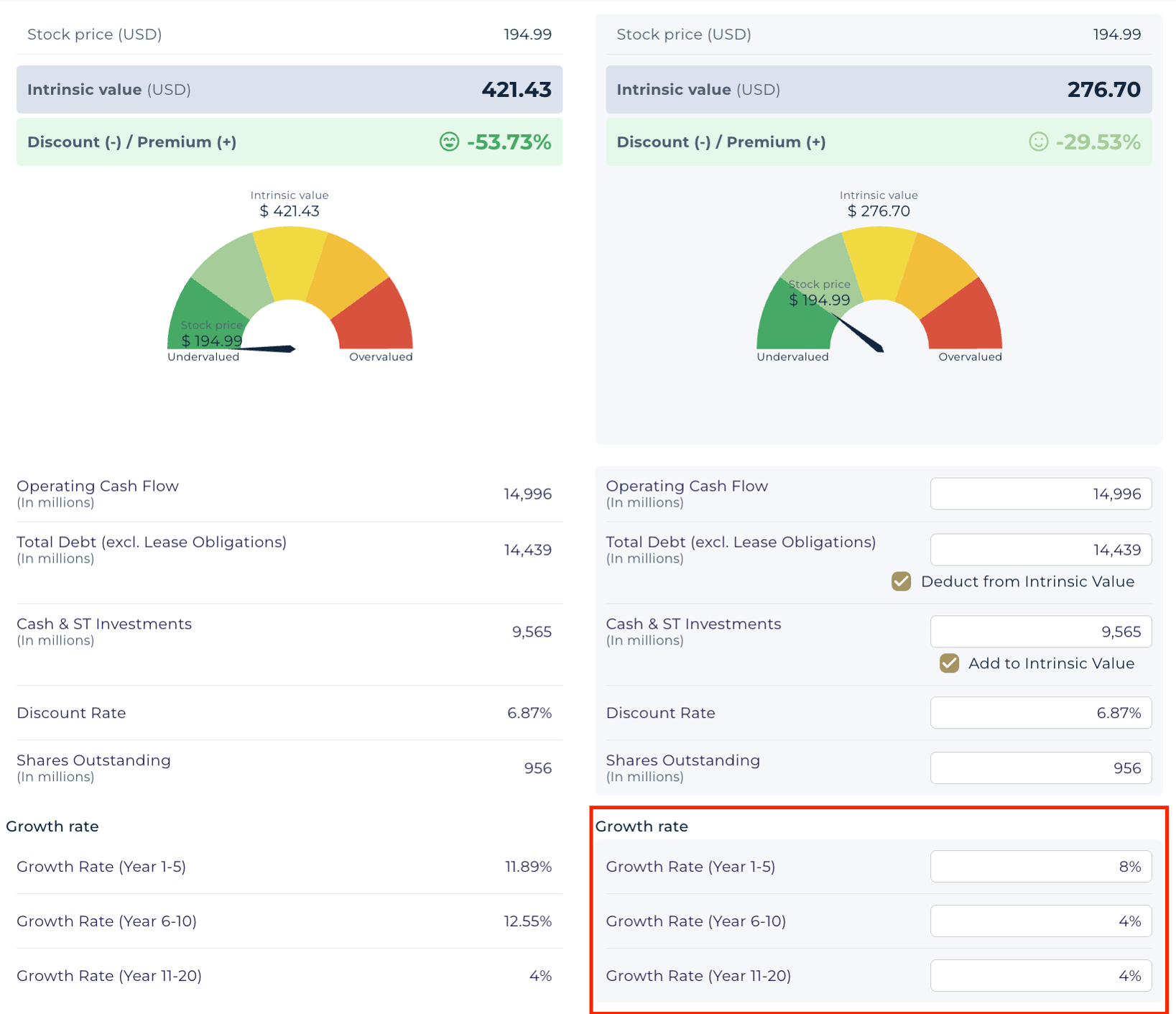
Pessimistic Growth Outlook Assumptions in CRM’s intrinsic value calculator - Powered by StockOracle™
Applying a conservative approach using a 20-Year Discounted Free Cash Flow (DCF) model with a pessimistic growth outlook (8% near-term, 4% mid- to long-term), the estimated intrinsic value for Salesforce (NYSE:CRM) is calculated to be $265.54 per share.
Salesforce Financial Performance Driving CRM FCF Intrinsic Value
Intrinsic value calculations depend heavily on a company’s ability to grow revenue, generate cash flow, and maintain competitive advantages.
Record Revenue Growth
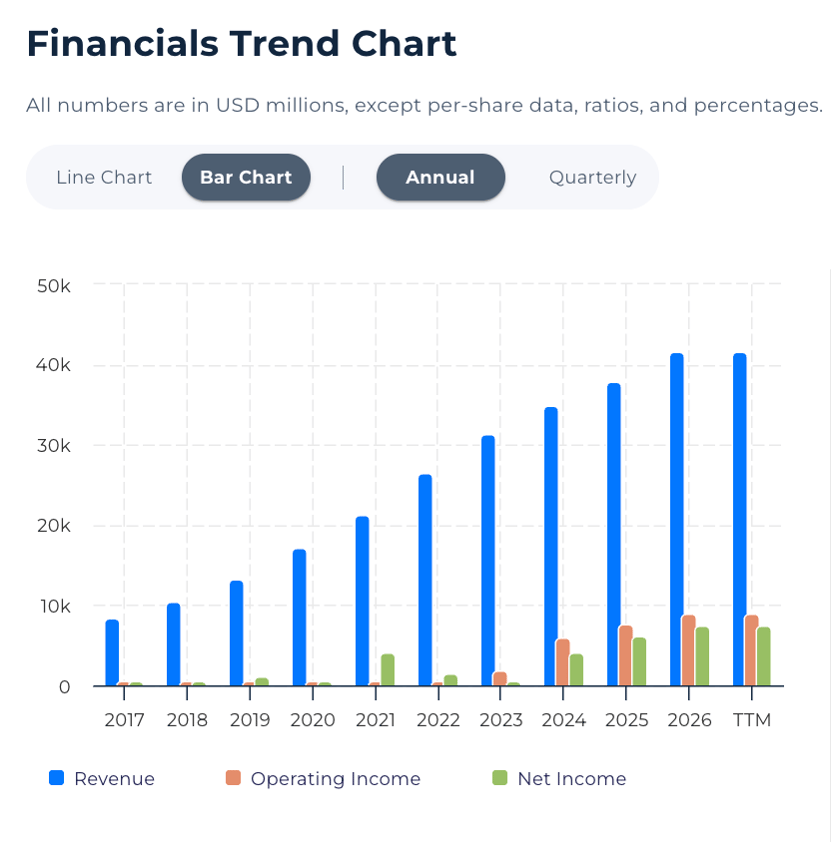
Salesforce (CRM) Revenue Trend Powered by StockOracle™
Salesforce finished fiscal year 2026 with:
- $41.5 billion in revenue
- 10% year-over-year growth
- 110 basis point expansion in operating margin
Revenue growth matters because it signals continued demand for Salesforce’s ecosystem of enterprise software.
Think of revenue growth like expanding the size of a water reservoir. The bigger the reservoir becomes, the more water (cash flow) it can produce downstream.
Free Cash Flow: The Core of Salesforce’s Intrinsic Value
When investors calculate intrinsic value, they rarely focus on single earnings alone.
Instead, they look at free cash flow which is the final amount of cash that a company has after all deductions and costs to run the business.
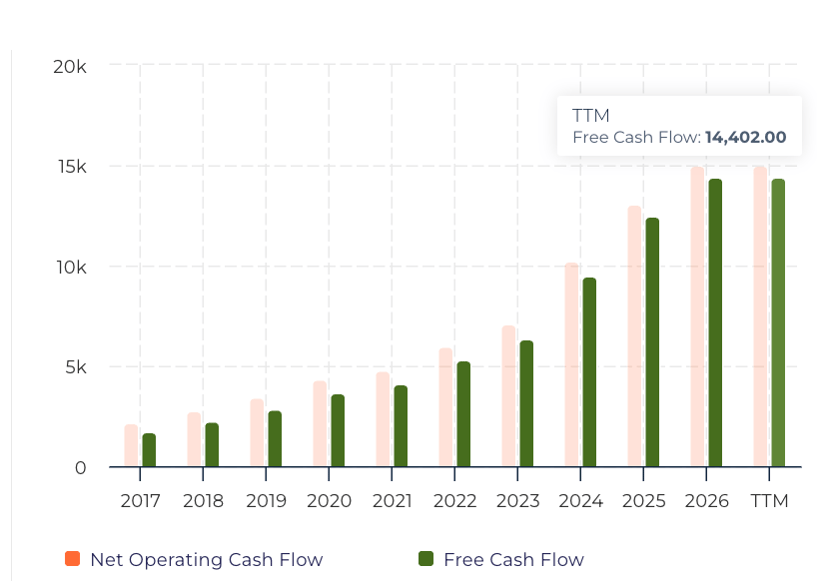
Operating Cash Flow and Free Cash Flow Chart Powered by StockOracle™
Salesforce generated:
- $14.4 billion in free cash flow
- 34.7% free cash flow margin
- 15% growth in operating cash flow
This margin is strong for a large software company.
To put it into perspective:
Salesforce is producing 34 cents of real cash for every dollar of revenue.
And the cash generated estimates it's future growth rates which is what ultimately determines Free Cash Flow intrinsic value calculations.
CRM Intrinsic Value and Shareholder Returns
Salesforce is also returning capital to shareholders as reported in it's recent earnings call. The company also recently authorised a $50 billion stock buyback program. This buyback could potentially retire 27% to 30% of outstanding shares.
When shares are repurchased, each remaining share basically owns a larger portion of the company.
AI Growth: Agentforce and Its Impact on Salesforce Valuation
Another factor affecting CRM intrinsic value is Salesforce’s AI expansion.
The company’s AI platform, Agentforce, is growing rapidly.
Key figures include, $800 million in Annual Recurring Revenue (ARR), 169% year-over-year growth, 29,000 deals closed and 50% quarter-over-quarter growth in deals.
More importantly, 60% of bookings came from existing customers.
This signals a powerful trend, Salesforce isn’t just acquiring new customers. It’s expanding revenue within its existing enterprise base. Which is a kind of growth that tends to be more predictable and profitable.
Future Revenue Signals: CRPO Growth
Another important metric investors watch is Current Remaining Performance Obligation (CRPO). CRPO represents contracted revenue that hasn’t been recognised yet, meaning it’s revenue already locked in for future quarters.
All in all Salesforce reported:
- 16% year-over-year CRPO growth
- 13% constant currency growth
- 9% organic CRPO growth excluding acquisitions
Salesforce’s Economic Moat and Switching Costs
One of Salesforce’s biggest advantages is its deep enterprise integration. Large corporations rely on Salesforce for critical functions such as:
- Customer relationship management
- Sales pipelines
- Customer support systems
- Marketing automation
- Data analytics
Replacing Salesforce is like replacing the central nervous system of a company’s sales operations. Large enterprises take a long time to migrate away from legacy systems, and many simply choose not to.
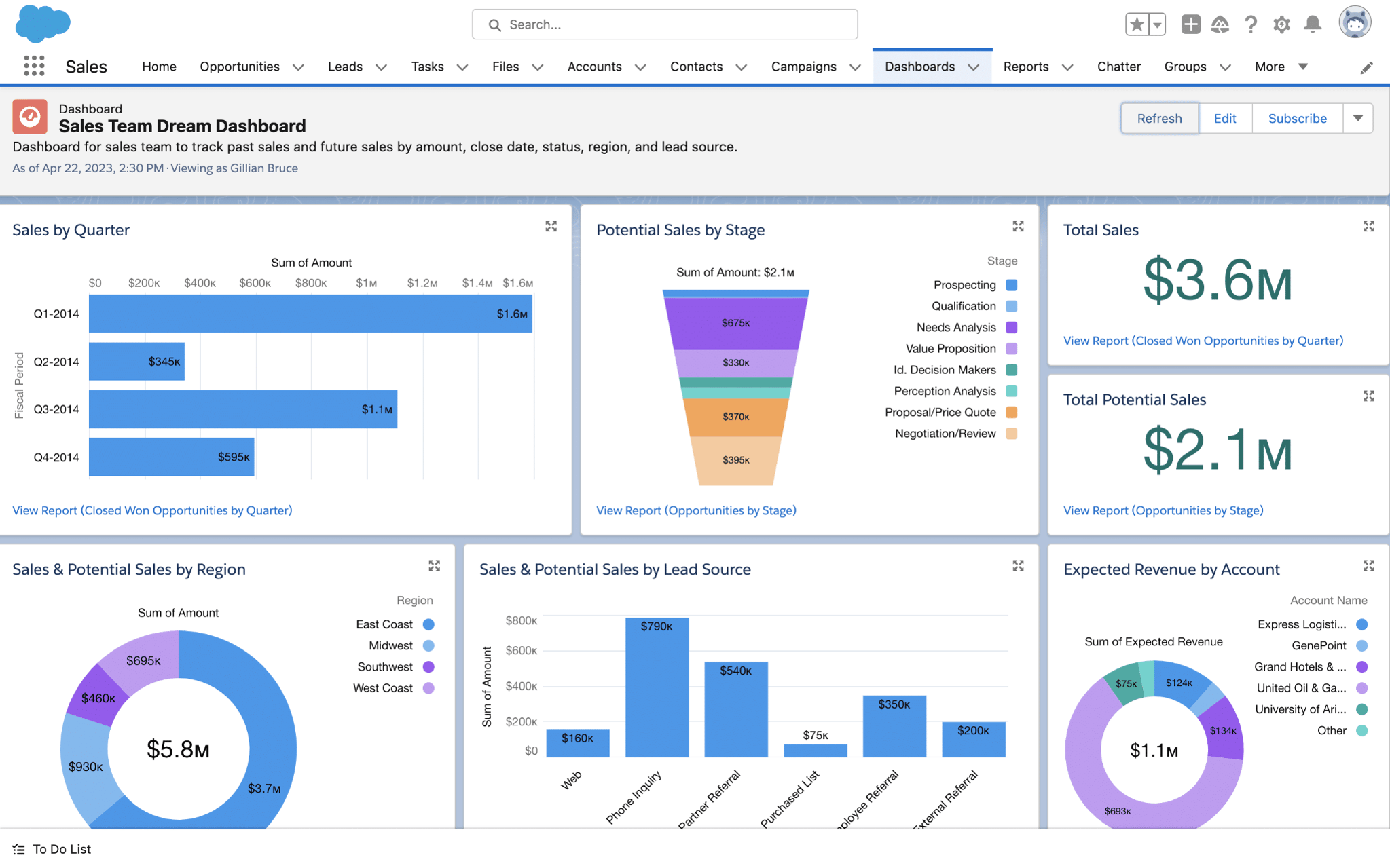
Example of Salesforce Admin Dashboard - src https://admin.salesforce.com/blog/2023/create-a-dream-dashboard-for-your-sales-team
These high switching costs help Salesforce maintain:
- Pricing power
- Stable recurring revenue
- Long customer relationships
Estimating Salesforce’s Intrinsic Value
Let's use a discounted cash flow (DCF) model to work out Salesforce (CRM) intrinsic value.
A conservative scenario assumes that Free cash flow margin is reduced to 25% to account for stock-based compensation and growth slowing to 4%. Even under these conservative assumptions, the model estimates Salesforce’s intrinsic value at roughly $200 per share. Which is below the current stock price, this gives investors a good margin of safety buying CRM at such price.
Investors can use this buffer to cushion themselves from forecasting errors or possible AI disruptions.
Compare other SaaS companies' intrinsic value to their current stock price with free StockOracle™ trial.
Final Thoughts on Salesforce’s Intrinsic Value
Salesforce remains a dominant company in enterprise software. Several factors support its fair value:
- Resilient in light of AI growth
- Massive free cash flow generation
- Aggressive share buybacks
- Explosive AI product adoption
- High switching costs for enterprise customers
While the market has recently shown pessimism toward the stock, the underlying business continues to perform strongly. With expected buybacks in stocks that will increase shareholders value.
If the company maintains its cash flow growth and AI expansion, Salesforce’s intrinsic value could trend significantly higher over time.
Related
Home Depot trades at 21.95 times trailing earnings, a multiple that assumes the growth engine ...

Philip Morris International posted its first $11.2 billion revenue quarter, with organic growth ...
Lam Research stock has surged more than 90% this year, outrunning nearly every semiconductor peer, ...