AbbVie has reported a record $16.99 billion quarter and replaced nearly all the Humira revenue lost to biosimilar competition. Yet its price-to-earnings ratio around 75 times, while reported net income has declined despite double-digit growth in the underlying business.
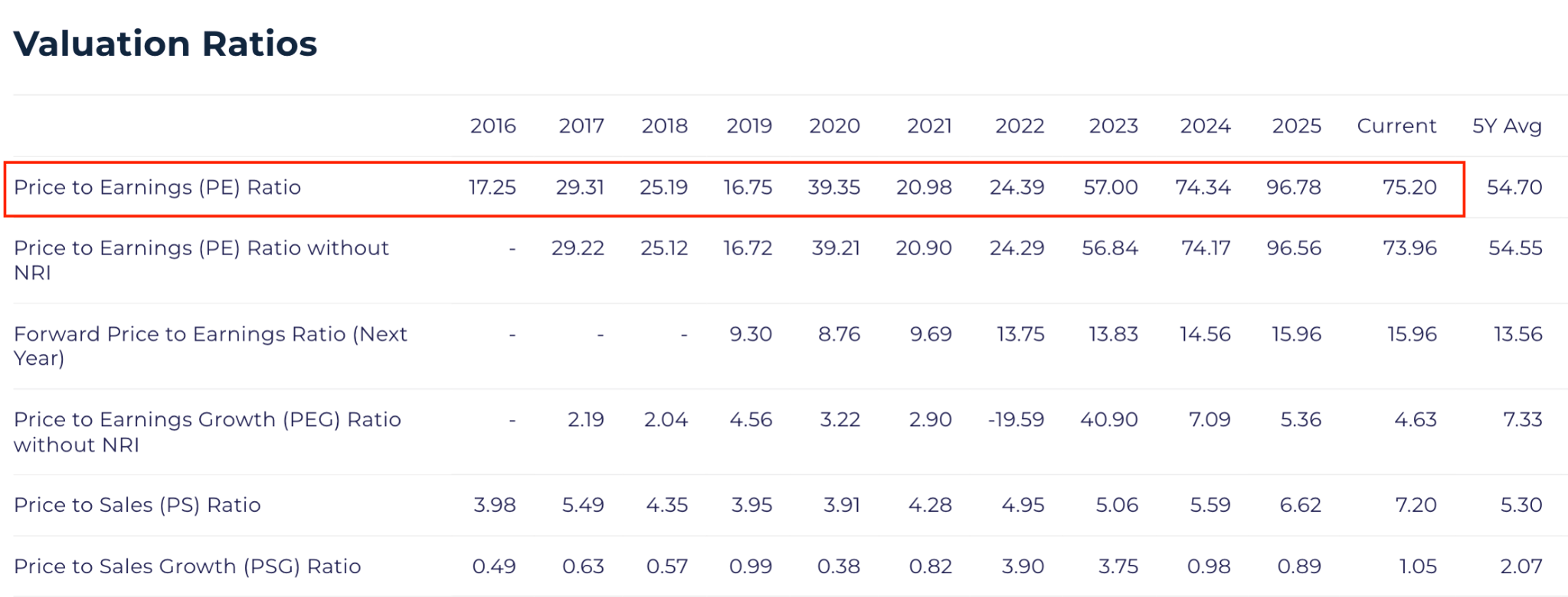
The valuation gap is unusually wide. A model based on earnings estimates fair value at barely a quarter of the result produced by a cash-flow model. Understanding that difference is central to AbbVie's intrinsic value.
What Does AbbVie Actually Do?
AbbVie is a research-driven pharmaceutical company best known for Humira, once the world's top-selling drug. Humira revenue is now declining as similar competitors enter the U.S. market.
The investment case depends on whether Skyrizi and Rinvoq can replace Humira and support the next growth cycle.
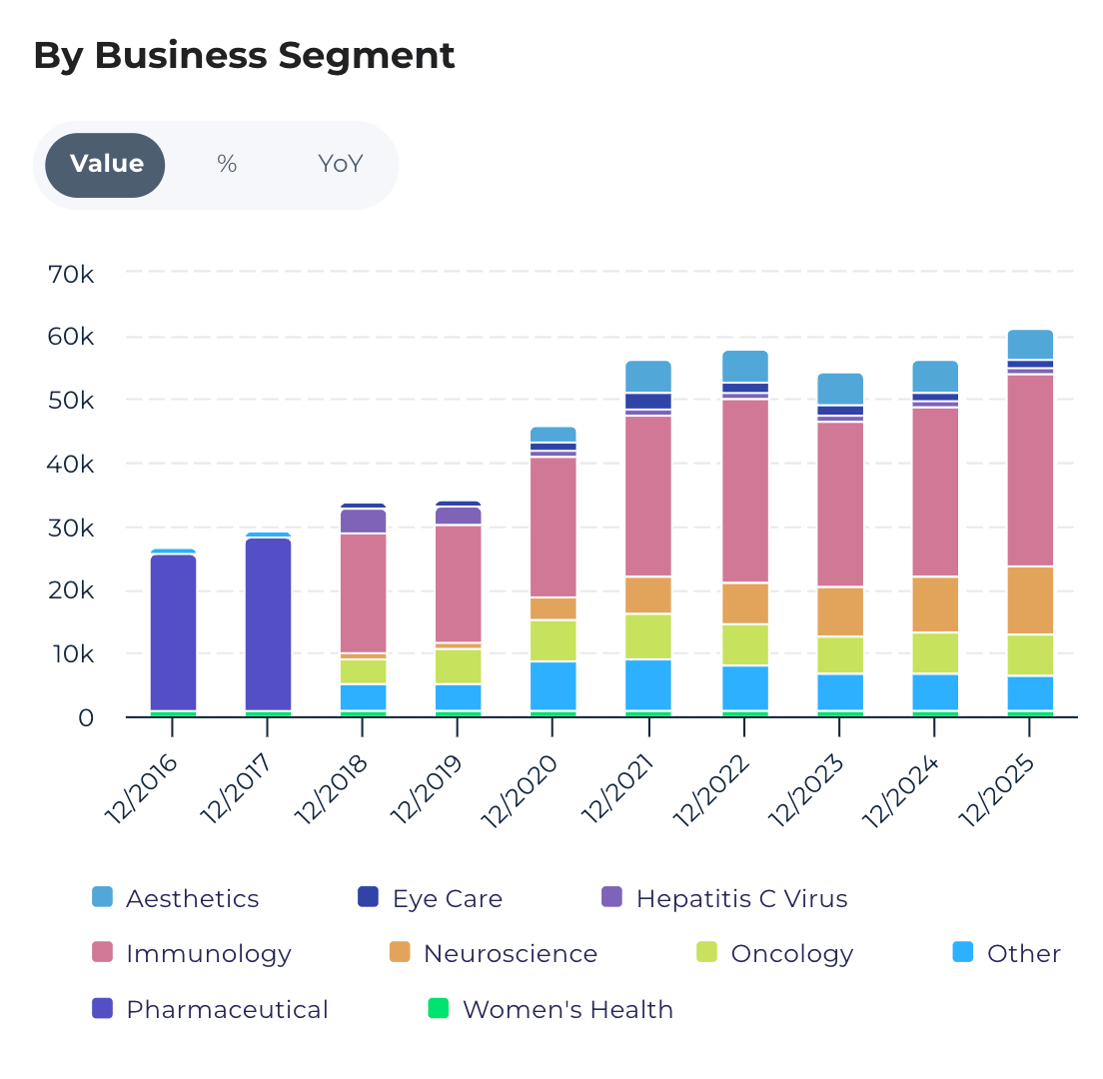
AbbVie also operates neuroscience, aesthetics and oncology franchises, built partly through acquisitions such as Allergan, Cerevel and ImmunoGen.
What Is AbbVie's Intrinsic Value?
Intrinsic value estimates what a business is worth based on the cash it can generate over time, rather than one accounting ratio or the current share price.
For AbbVie, the valuation method matters because reported earnings and cash flow tell different stories. Using the price-to-earnings ratio alone is like judging a property's rental income after subtracting a large non-cash accounting charge. The expense may be valid, but it does not show how much cash entered the bank account. So let’s dive in.
AbbVie's Fair Value: Why the Model Changes the Answer
A 20-year discounted cash flow model estimates AbbVie's fair value at about $388.36 per share. It starts with $19.5 billion in operating cash flow, adjusts for cash and debt, and discounts future cash flows at 5.79%.
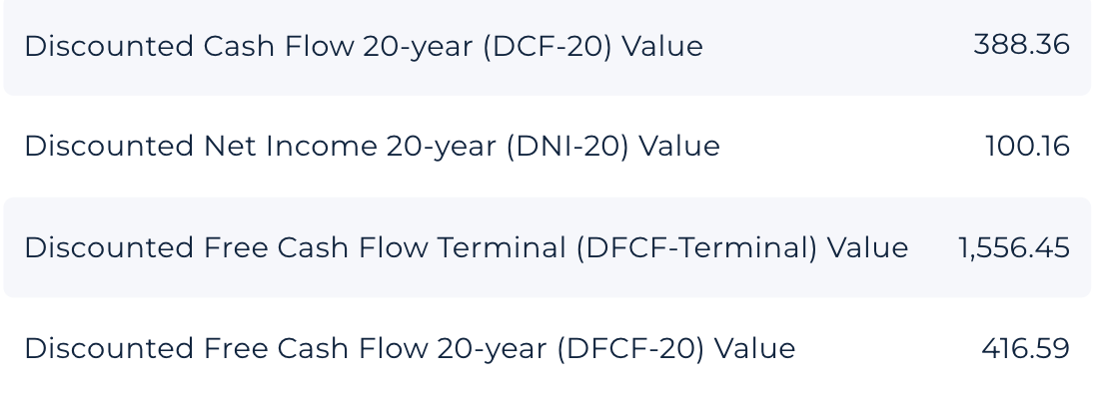
A discounted net income model using the same 20-year period produces a much lower estimate of $100.16 per share. The difference comes mainly from AbbVie's starting financial measure, not its forecast period.
GAAP net income is reduced by non-cash amortisation tied to intangible assets from the Allergan acquisition. Trailing net income is $6.27 billion, compared with $18.21 billion in free cash flow. Amortisation and acquisition-related charges affect the income statement without requiring the same cash outflow in the current period.

Both models use growth of 15.97% in Years 1 to 5, 14.81% in Years 6 to 10, and 4% thereafter. The cash-flow model therefore offers the cleaner view of current cash-generating ability, while the net income model highlights the accounting and balance-sheet burden created by acquisitions.
Investors should not simply average the two estimates. The more useful approach is to understand what each model measures. The $388.36 figure better represents operating cash generation, but it still depends on strong growth and a supportive discount rate. The $100.16 result is more distorted by non-cash charges, but it warns against ignoring acquisition costs and leverage entirely.
AbbVie (ABBV) Financial Performance
Revenue: The Post-Humira Recovery Is Working
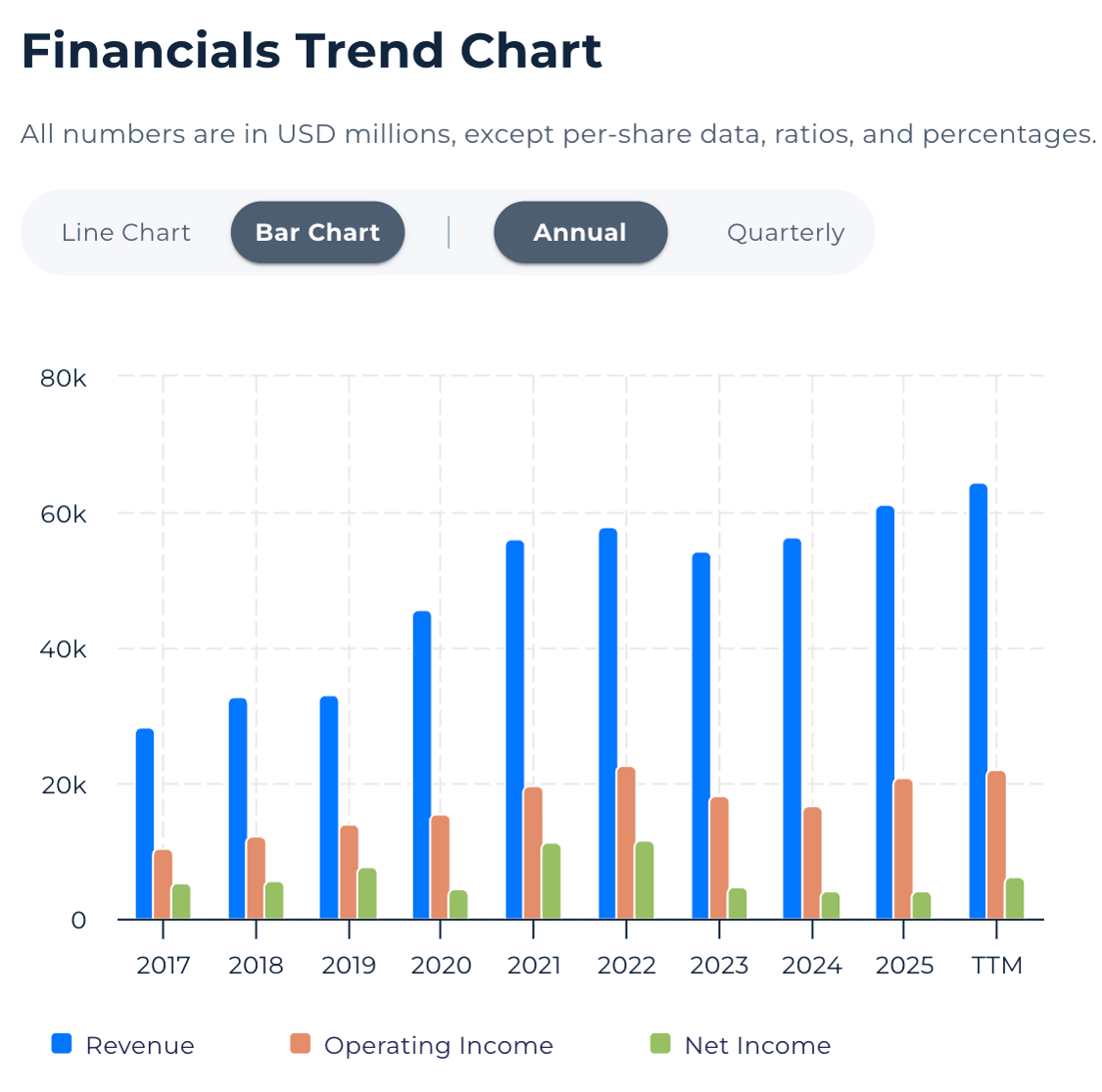
AbbVie (ABBV) Revenue, Operating Income and Net Income Trend. Powered by StockOracle™.
Trailing revenue reached $64.4 billion, up from $61.2 billion in fiscal 2025. Skyrizi and Rinvoq have more than offset Humira's decline, confirming that AbbVie's replacement strategy is working.
The two drugs generated about $8.03 billion in the latest quarter, up 24% year over year. Humira revenue fell 36% over the same period. This mix shift is the main reason revenue can grow while the former flagship product contracts. Which are common in pharmaceutical companies.
Reported net income has not followed the same path because acquisition-related accounting charges remain significant. That divergence supports using revenue and cash flow together rather than relying on P/E alone.
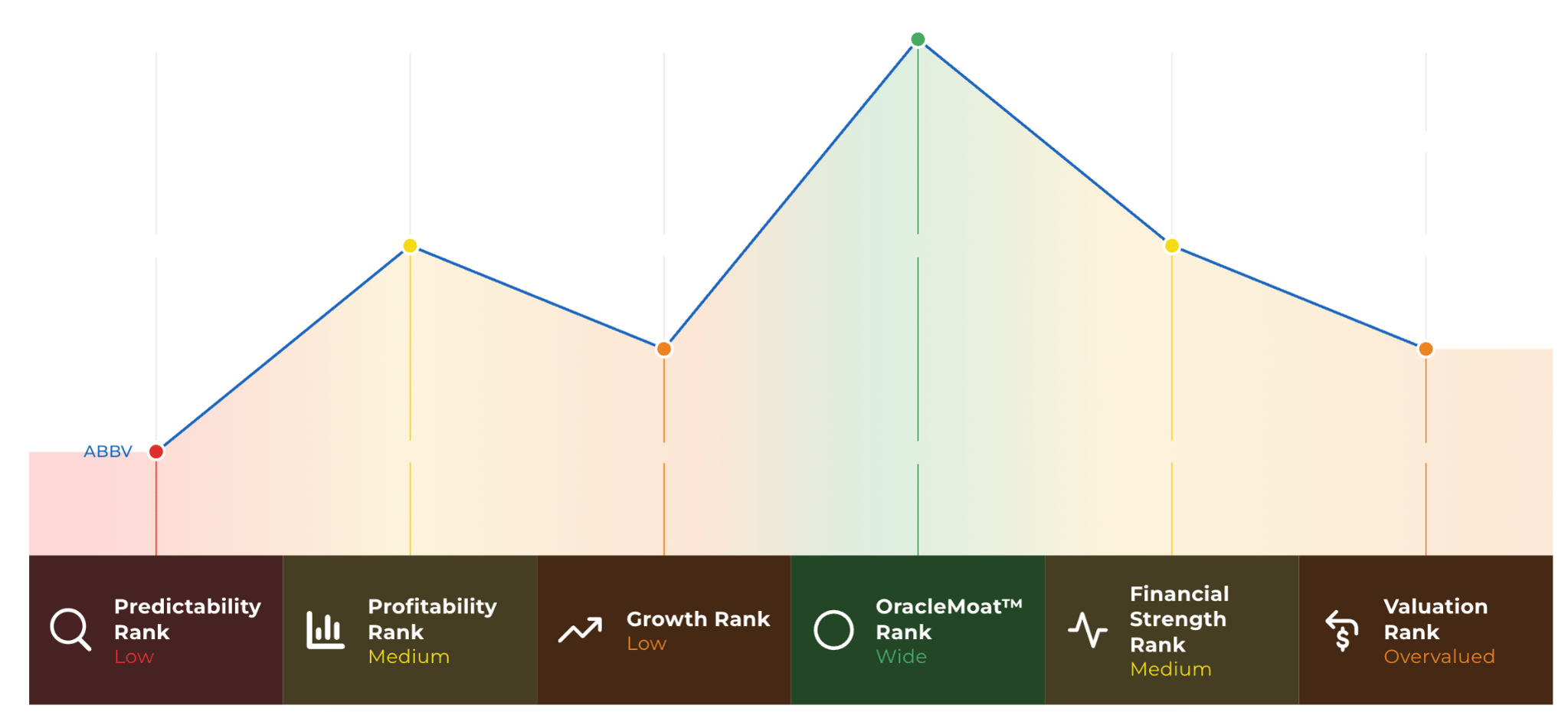
ABBV’s OracleIQ™ powered by StockOracle™ , Low Growth , Strong Moat.
The replacement also creates concentration risk. Skyrizi and Rinvoq are succeeding, but a larger share of the growth outlook now depends on two products. Investors should track market share, new indications and competitive launches rather than judging the transition only by total revenue.
Free Cash Flow: The Cleaner Operating Signal
Free cash flow is the cash remaining after AbbVie funds its operations and capital spending. It can support dividends, debt repayment, acquisitions and research investment.
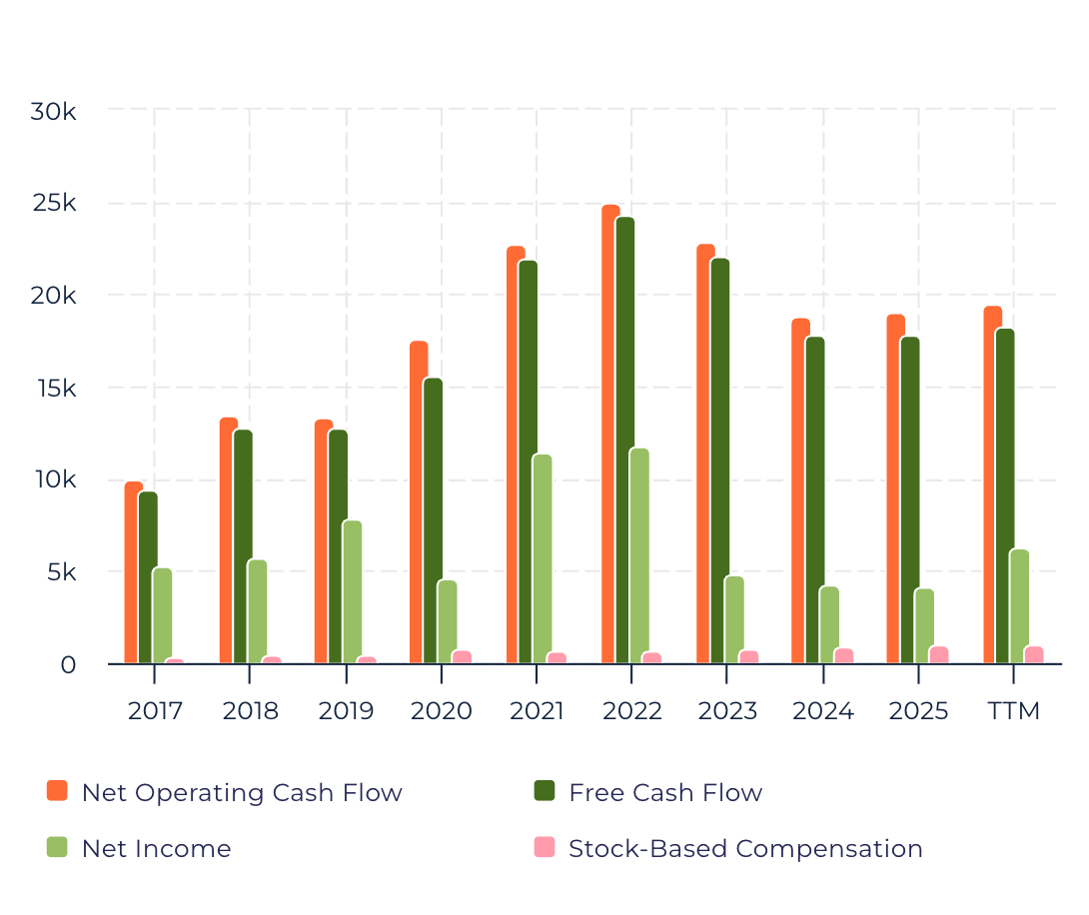
AbbVie (ABBV) Operating Cash Flow and Free Cash Flow Trend. Powered by StockOracle™.
AbbVie's trailing free cash flow margin is 28.28%, meaning it converts about 28 cents of each revenue dollar into cash. The margin has remained stable even while GAAP net income weakened.
Those charges reflect the cost of assets AbbVie acquired, so investors should still monitor whether future deals produce enough growth to justify their price.
Returns on Capital: ROE Is Distorted
Trailing return on invested capital (ROIC) is 10.51%, a reasonable but not exceptional level for a mature pharmaceutical company. ROIC remains useful because it compares operating profit with the capital invested in the business.
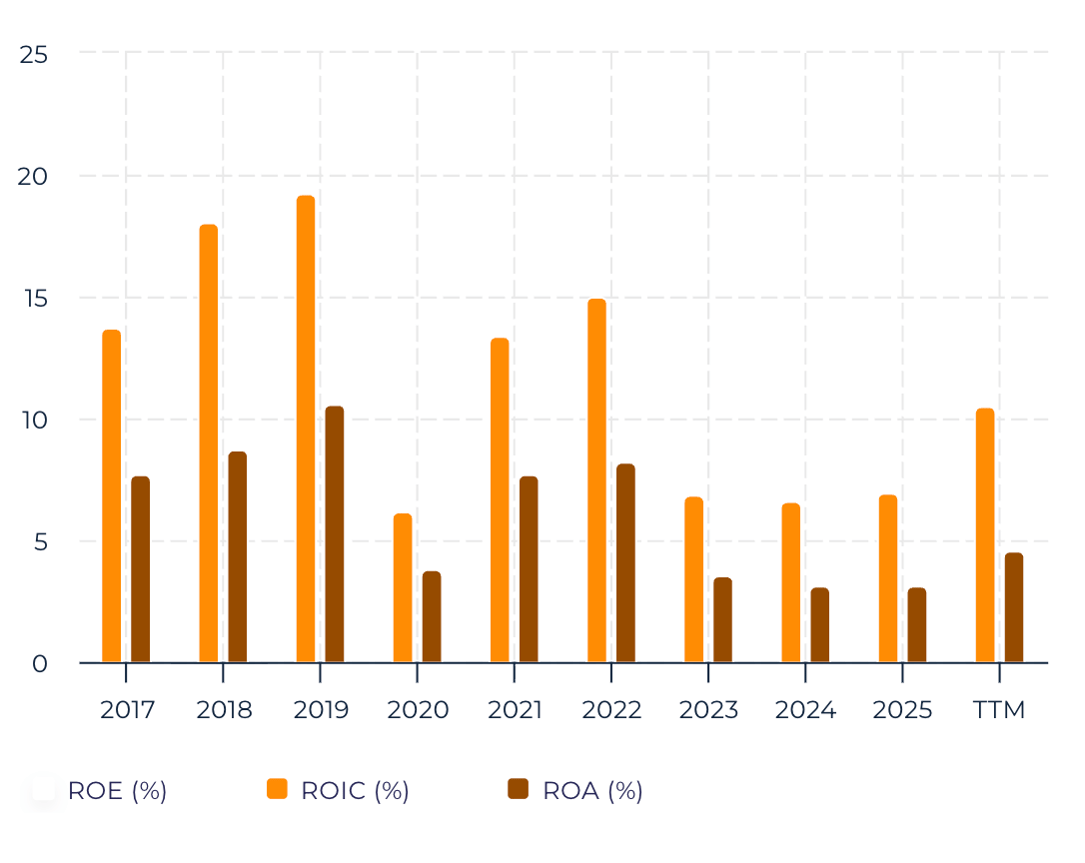
Return on equity is not informative because AbbVie's shareholders' equity is negative. Acquisition-related amortization and impairment charges have reduced the accounting equity base, making the ratio mathematically distorted. Investors should rely more on ROIC, cash generation and debt reduction until the equity base normalises.
Shareholder Returns: Dividend First, Buybacks Second
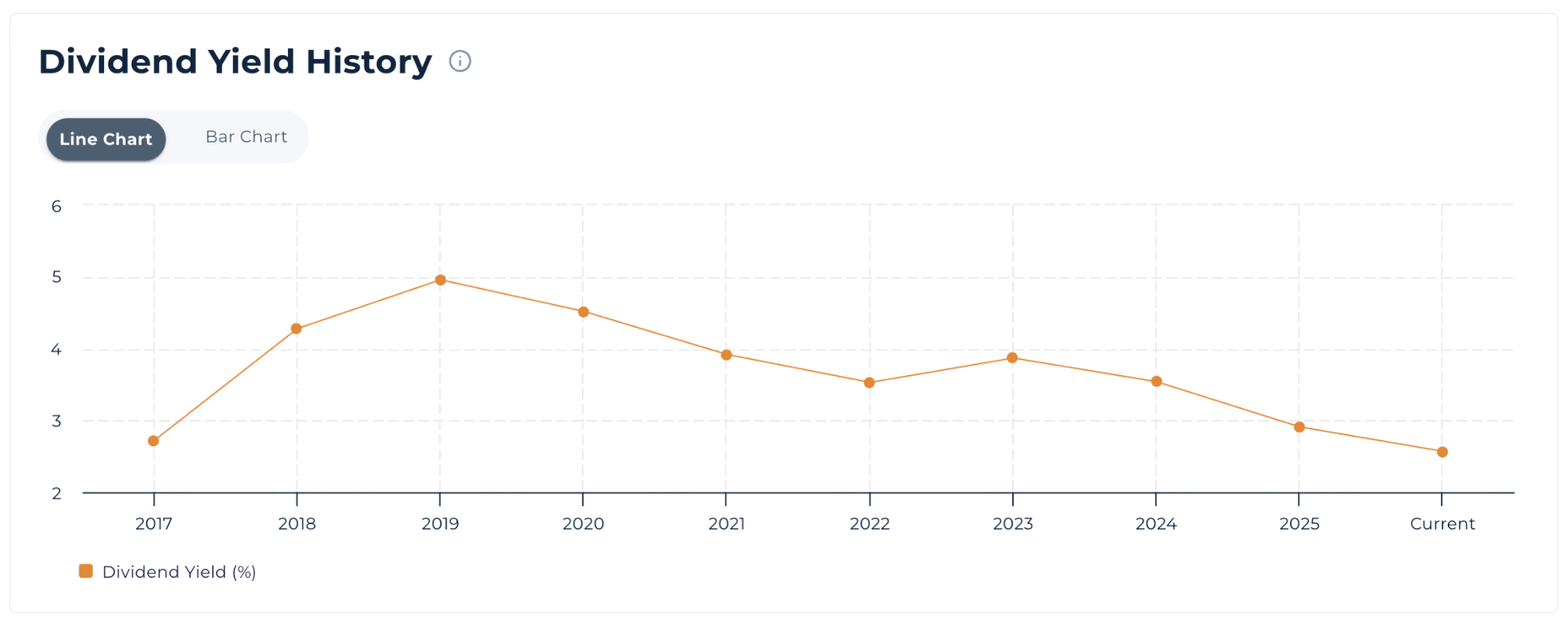
AbbVie offers a 2.64% dividend yield and has increased its dividend for roughly 54 years through its Abbott lineage. Trailing buybacks were more modest at $1.51 billion.
The allocation priority is clear. AbbVie is protecting its dividend and managing debt rather than aggressively shrinking the share count. That approach is sensible while the company absorbs major acquisitions and rebuilds its post-Humira growth base.
Growth Catalysts
Skyrizi and Rinvoq: The Main Growth Engine
- Combined quarterly revenue reached $8.03 billion, up 24%, while full-year 2026 guidance calls for more than $31 billion.
- Fiscal 2025 combined revenue of $25.9 billion already exceeded management's earlier 2027 target, showing that the drugs have outperformed prior expectations.
- AbbVie continues to guide for high-single-digit company revenue growth through 2029.
The opportunity is supported by product improvements, including a subcutaneous Skyrizi formulation that removes the previous infusion requirement. Easier administration can strengthen adoption and help protect the franchise.
Competition remains the main risk. Johnson & Johnson is developing an oral treatment targeting the same IL-23 pathway. If it offers similar efficacy with greater convenience, Skyrizi's growth could slow even if the overall immunology market expands.
For valuation, Skyrizi and Rinvoq must do more than replace Humira. They need to sustain enough momentum to support the model's 15.97% near-term growth assumption.
Beyond Immunology: Building the Next Layer
Neuroscience is emerging as a second growth engine, with revenue up 26% in the latest reported quarter. Aesthetics remain softer, as modest Botox Cosmetic growth has been offset by weakness in Juvederm and dermal fillers.
AbbVie also announced a $10.9 billion acquisition of Apogee Therapeutics in June 2026. The deal adds candidates in atopic dermatitis and respiratory disease, but management does not expect it to become accretive to adjusted earnings until 2032.
These businesses matter more to the period after 2029 than to today's fair value. They can extend AbbVie's growth once Skyrizi and Rinvoq mature, but investors should not treat early-stage pipeline value as guaranteed cash flow.
Economic Moat: Why AbbVie Still Rates a Wide Moat
StockOracle™ rates AbbVie as a Wide Moat business. Its advantage comes from patents, clinical evidence, regulatory approvals and physician familiarity. These barriers make successful immunology drugs difficult to displace quickly.
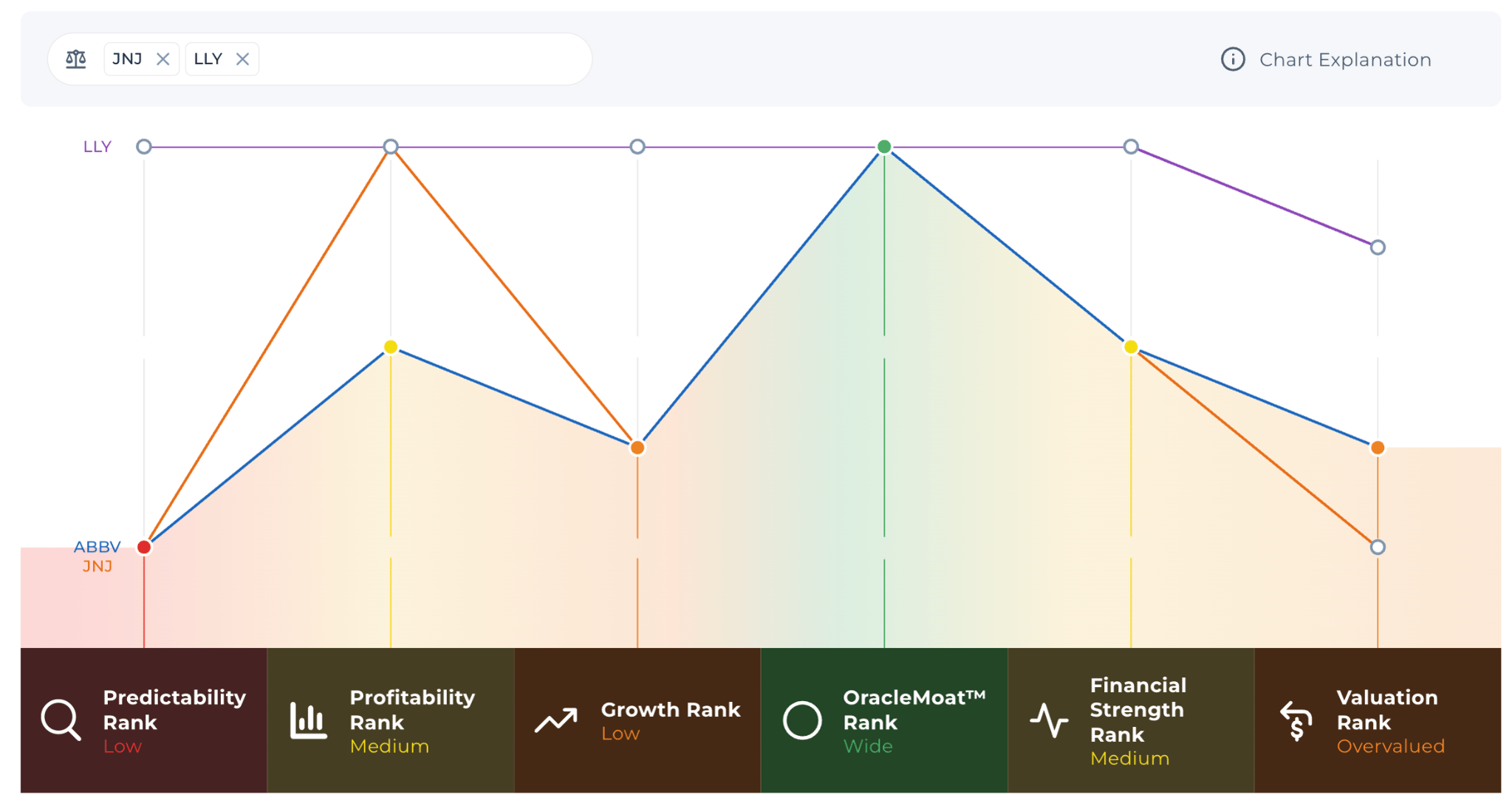
OracleIQ™ comparison of ABBV , LLY , JNJ Powered by StockOracle™
The competitive threat varies by company. Johnson & Johnson has a credible alternative mechanism and an established immunology sales network. Amgen and Novartis bring large-scale biologics and biosimilar capabilities. Eli Lilly can invest heavily in neuroscience and other therapeutic areas where AbbVie wants to expand.
AbbVie's moat is strongest in established immunology products. It is less certain in therapeutic areas being entered through acquisitions. Buying a promising asset gives AbbVie access to the race, but it does not guarantee the same advantage it already holds with Skyrizi and Rinvoq.
Pharmaceutical moats also expire. Patents provide a period of protected economics, but every successful drug eventually faces competition. AbbVie's long-term advantage therefore depends on repeatedly converting research and acquisitions into approved products before existing exclusivity fades.
Building Your Own DCF: What Would Have to Be True
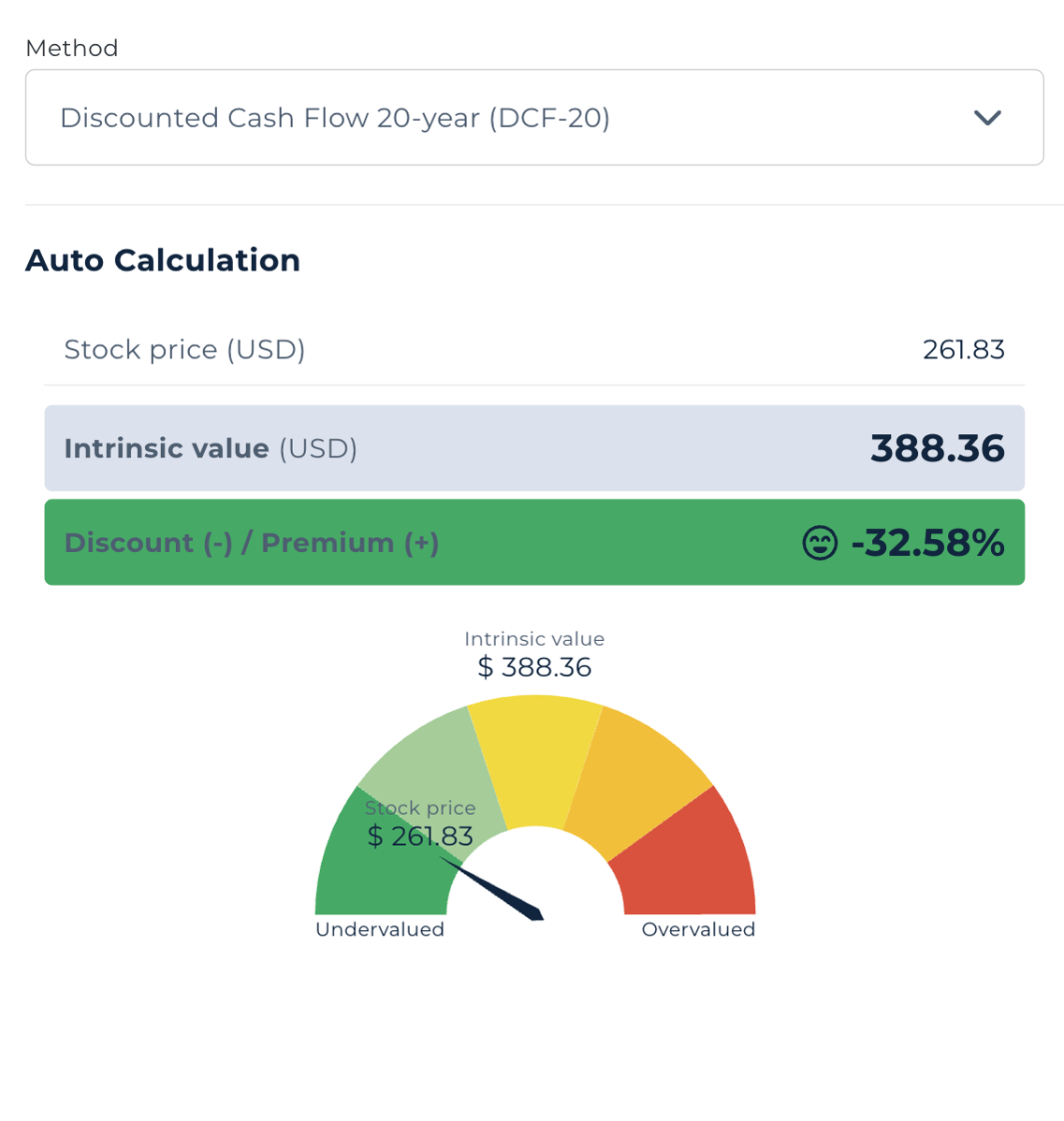
The $388.36 cash-flow estimate uses 15.97% growth in the first five years. Moving that assumption toward AbbVie's longer-term high-single-digit guidance would reduce fair value materially.
For the current base case to hold, two conditions matter most:
- Skyrizi and Rinvoq must continue growing strongly as competing treatments enter the market.
- Neuroscience and newer pipeline assets must begin contributing before the core immunology franchise matures.
Investors should also test a higher discount rate and account for debt. Strong cash flow supports the valuation, but acquisitions have made the balance sheet and reported earnings more complex.
Run your own growth assumptions through StockOracle's free DCF calculator.
Final Thoughts on AbbVie's Intrinsic Value
- Skyrizi and Rinvoq have successfully offset Humira's decline and remain the central drivers of the growth forecast.
- The 28.28% free cash flow margin presents a healthier picture than GAAP net income, which is reduced by acquisition-related amortization.
- The gap between $388.36 and $100.16 reflects two different starting measures, not two equally reliable price targets.
- Apogee and neuroscience may extend growth beyond 2029, but they are not yet essential to the current valuation case.
AbbVie's investment case depends on which financial measure best represents the business. The elevated GAAP P/E overstates the weakness in operating performance because non-cash charges depress earnings. At the same time, cash flow should not be used to ignore the cost and risk of AbbVie's acquisition strategy.
The cash-flow model is the more useful starting point today. It remains a base case, not a guaranteed outcome. If Skyrizi and Rinvoq maintain their momentum, $388.36 becomes easier to support. If competition slows the immunology franchise before newer assets contribute, fair value would move lower even if cash generation remains respectable.
This analysis is for educational purposes only and is not financial advice or a recommendation to buy, sell or hold any security. The DCF is based on adjustable assumptions, not a fixed or guaranteed valuation. Past performance is not indicative of future results. Piranha Profits and StockOracle™ are financial education providers, not licensed financial advisors. All figures, especially third-party drug-pipeline and competitor data, should be independently verified before publication.