UnitedHealth spent much of 2026 as the sector's cautionary tale, falling as much as 18% on regulatory scrutiny and a medical cost ratio that ran hot, before raising full-year guidance, pushing the stock back toward $385.
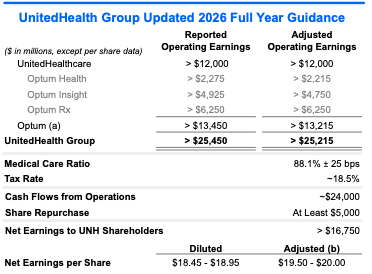
The company now projects a full year adjusted net earnings around $20.00 per share with an improved outlook for the year.
Is this a genuine turnaround, or has the market already priced in a recovery the numbers haven't fully proven out yet?
What Does UnitedHealth Actually Do?
UnitedHealth Group operates through two main engines.
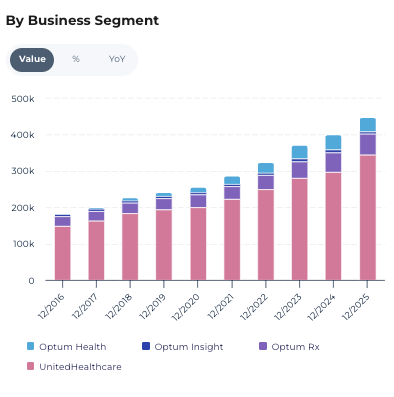
UnitedHealthcare is the insurance business, selling employer, individual, Medicare Advantage, and Medicaid health plans to roughly 48.5 million members.
Optum is the services and technology arm, spanning pharmacy benefits (OptumRx), care delivery (OptumHealth), and data and consulting services (OptumInsight), serving more than 120 million consumers.
This article's valuation section will discuss if the insurance side has spent the past two years absorbing a costly reset in how much medical care actually costs to cover, while the DOJ has been investigating how closely UnitedHealthcare and Optum work together.
What Is UnitedHealth's Intrinsic Value?
Intrinsic value is an estimate of what a business is actually worth based on the cash and earnings it can realistically sustain over time, not whatever the market happens to pay for it after a volatile year. For UnitedHealth, that estimate depends heavily on the company's long-stated growth after the medical-cost reset. Or does 2026 mark a permanently slower, lower-margin version of the business?
UnitedHealth's Fair Value: A Wide Spread Between the Growth-Trusting Read and the Grounded One
Run UnitedHealth's numbers through a 20-year discounted cash flow model using its own 15.96% projected 3-5 year EPS growth rate and the output looks dramatic: the Discounted Cash Flow 20-year (DCF-20) method lands at $1,058.86 per share, the Discounted Free Cash Flow 20-year (DFCF-20) method at $919.39, and the Discounted Net Income 20-year (DNI-20) method, the most conservative of the cash-flow-based trio, still comes in at $529.90.
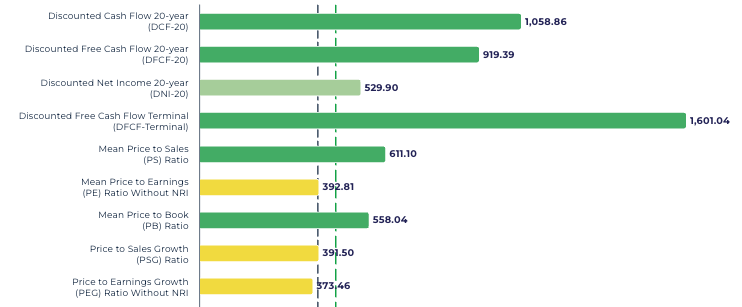
UnitedHealth Group (UNH) Valuation Chart — Model Breakdown — Powered by StockOracle™ · Accurate as of 21 August 2026
Look at the multiples-based methods instead and the picture grounds out closer to today's price: Mean Price-to-Earnings (without NRI) puts fair value at $392.81, within striking distance of the current $384.85 share price, while Mean Price-to-Sales ($611.10) and Mean Price-to-Book ($559.13) sit further above.
That $392.81 matters because it isn't leaning on two decades of compounding at nearly 16% a year; it's simply asking what the market has historically paid for a dollar of UnitedHealth's trailing earnings.
UnitedHealth (UNH) Financial Performance
Revenue and Earnings: The Reset Shows Up, Then Starts to Reverse
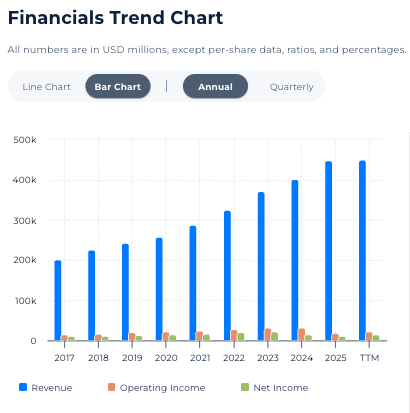
UnitedHealth Group (UNH) Revenue, Operating Income and Net Income Trend — Powered by StockOracle™
Second-quarter 2026 revenue reached $112.0 billion, up modestly year-over-year, but net earnings attributable to shareholders jumped to $5.484 billion from $3.406 billion, a swing that has as much to do with cost control as growth. Management raised full-year 2026 adjusted EPS guidance to $19.50 to $20.00, citing "performance year-to-date and an improved outlook for the remainder of the year." UnitedHealth's Q2 2026 results release has the full detail.
The two segments split cleanly by role. UnitedHealthcare contributed $86.0 billion of that revenue serving 48.5 million members, while Optum added $65.7 billion serving over 120 million consumers across pharmacy, care delivery, and data services.

The Medical Care Ratio: The Number Behind Both the Selloff and the Recovery
The medical care ratio, the share of premium revenue spent on actual medical claims, is the number that explains most of both the stock's decline and its recovery. A rising ratio through 2025 signaled that reimbursement rates (CMS proposed just a 0.09% Medicare rate increase for 2026) weren't keeping pace with rising utilization in outpatient surgeries and specialized care, compressing margins across the Medicare Advantage book.
That ratio has since improved to 86.7% in the second quarter from 89.4% a year earlier, helped by $860 million in favorable prior-period medical reserve development. That's the concrete evidence behind management's decision to raise guidance rather than simply talk up the stock.
Free Cash Flow and Returns on Capital
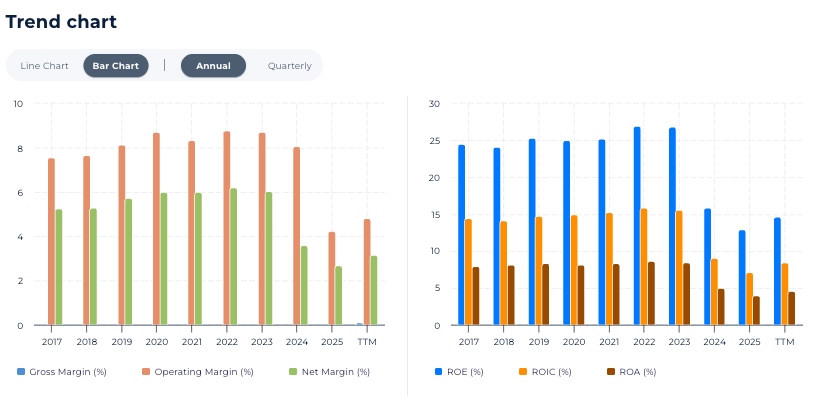
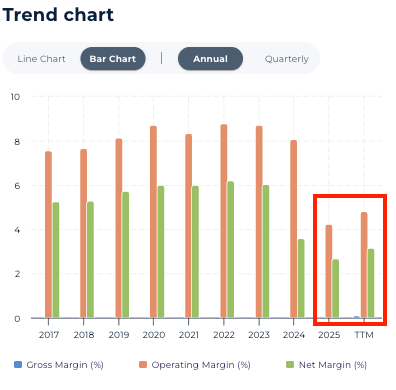
UnitedHealth Group (UNH) Margins and Returns Trend — Powered by StockOracle™
Return on equity (TTM) reads 14.62% and return on invested capital 8.40%, both softer than UnitedHealth's own multi-year history, a direct reflection of the margin compression described above.
Free cash flow yield sits at 6.71% on, translating to real cash generation even through the reset: cash flow from operations reached $19.964 billion in the first half of 2026 alone, and full-year guidance calls for roughly $24 billion.
Membership: A Mixed Signal Worth Naming Plainly
Medicare Advantage membership fell by 965,000 since year-end 2025, an industry-wide headwind as insurers pull back from unprofitable plan designs rather than a UnitedHealth-specific problem. That's a real cost to future premium growth, and it's the honest counterweight to the medical-cost-ratio improvement above.
Shareholder Returns
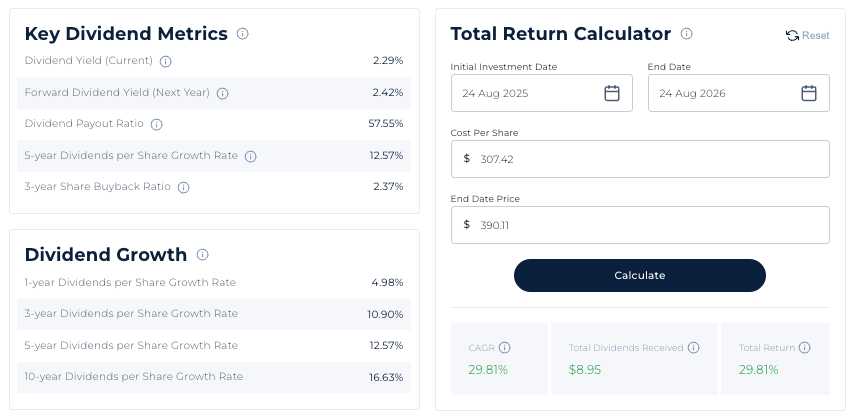
UnitedHealth's dividend yield sits at around 2.29%, and the company has continued returning capital to shareholders through buybacks even during the reset year, a sign management views the margin pressure as cyclical rather than structural.
Growth Catalysts
What Has to Keep Improving for the Recovery to Hold
- Continued cost and pricing discipline, the combination management credited for the medical care ratio improvement, needs to persist into 2027 rather than prove to be a single-quarter reserve benefit.
- Optum's diversification into pharmacy services, care delivery, and data analytics gives UnitedHealth a growth engine less exposed to Medicare Advantage reimbursement policy than the insurance side alone.
- Resolution or narrowing of the DOJ antitrust investigation into the relationship between Optum and UnitedHealthcare would remove a persistent overhang that has kept conservative investors on the sidelines.
- An aging U.S. population remains the structural tailwind underneath the entire Medicare Advantage category, even as near-term reimbursement economics stay contested.
Why it matters for valuation: each of these is a reason the 15.96% growth assumption behind the cash-flow-based figures isn't pulled from nothing, but none of them is proof it will hold for the next two decades rather than the next few quarters.
Economic Moat: Why StockOracle™ Rates UnitedHealth a Narrow Moat
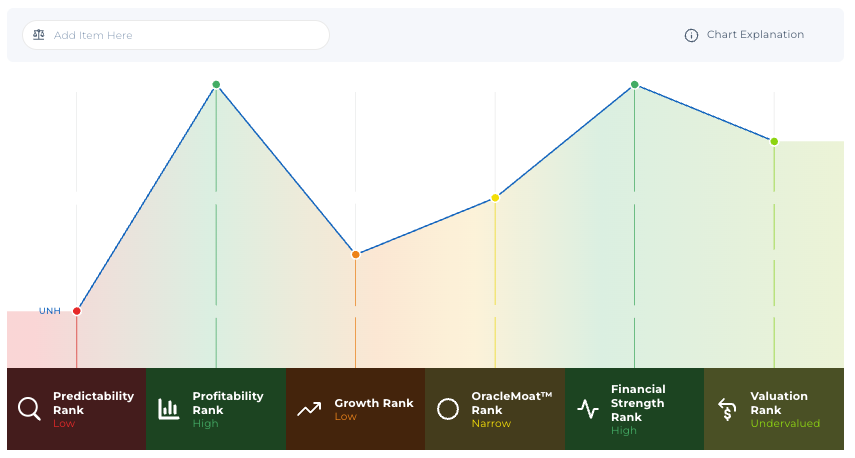
StockOracle™ rates UnitedHealth a Narrow Moat business. The moat case still rests on real scale: UnitedHealthcare's 48.5 million members and Optum's reach into more than 120 million consumers give the combined company negotiating leverage with hospitals and pharmacies that smaller insurers can't match.
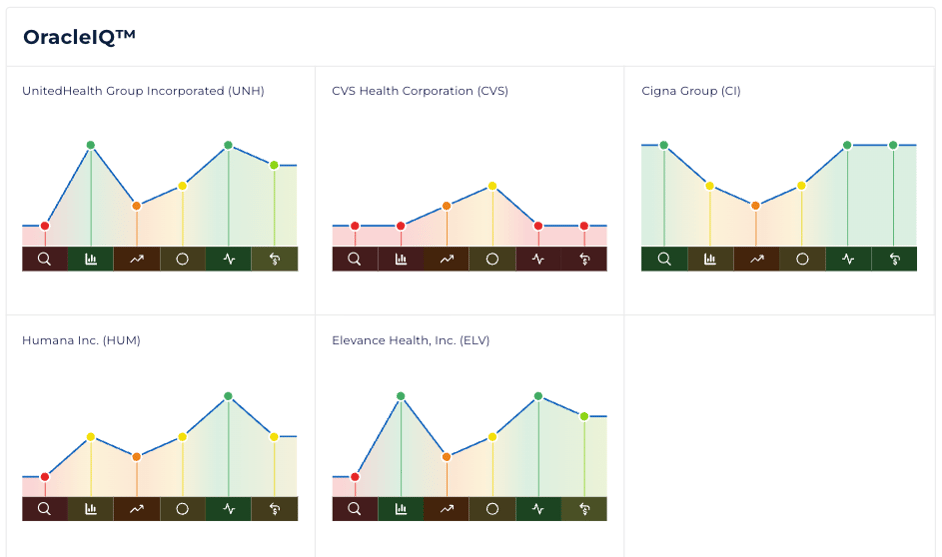
The competitive set carries different, specific advantages.
CVS Health, through Aetna and its pharmacy footprint, runs a comparable integrated insurance-and-services model but with a larger retail pharmacy network.
Cigna and Humana both compete directly in Medicare Advantage, with Humana more concentrated in that single category and therefore more exposed to the same reimbursement pressure UnitedHealth is working through.
Elevance Health carries a similarly integrated model with stronger regional Blue Cross Blue Shield brand relationships in specific states. None of these rivals fully replicate UnitedHealth's combination of insurance scale and Optum's services breadth, which is why the moat rating is narrow rather than none.
A More Conservative Look at UnitedHealth's Fair Value
The $529.90 to $1,058.86 range above all lean on the 15.96% growth assumption, which mirrors UnitedHealth's own long-stated 13% to 16% long-term algorithm. Management has publicly reaffirmed that target even through the reset, but a more skeptical investor might reasonably trim that assumption toward the high single digits until the medical care ratio has held steady for several consecutive quarters rather than one.
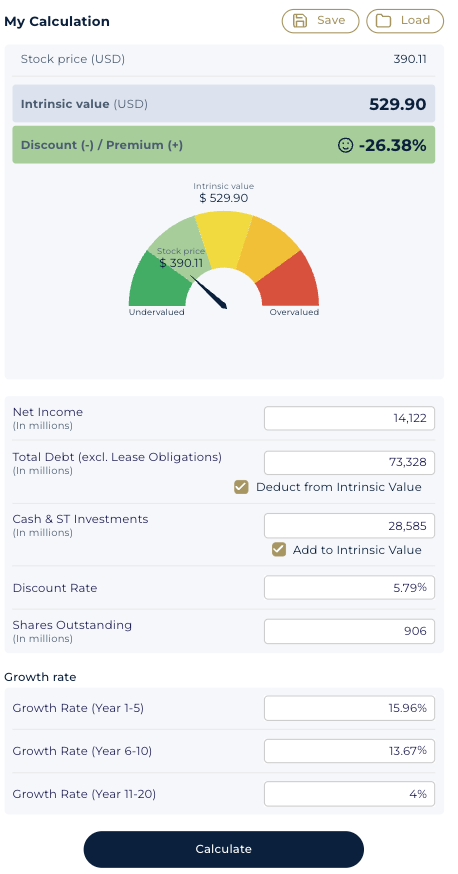
Turn the exercise around and ask what has to be true for the higher end of the range to hold. Readers can run their own growth assumptions through StockOracle's free DCF calculator.
Final Thoughts on UnitedHealth's Intrinsic Value
- The medical care ratio improved to 86.7% from 89.4% a year earlier, the single clearest evidence behind management's decision to raise full-year guidance.
- Net earnings more than doubled year-over-year in the second quarter, even as the DOJ's antitrust investigation into Optum and UnitedHealthcare remained unresolved.
- Cash-flow-based fair-value models ($529.90 to $1,058.86) lean heavily on UnitedHealth's own 13–16% long-term growth algorithm; the more grounded mean price-to-earnings read ($392.81) sits much closer to today's price.
- Medicare Advantage membership fell 965,000 since year-end 2025, a real headwind that the margin recovery hasn't offset.
- Optum's scale across pharmacy, care delivery, and data services remains the company's structural moat, though regulatory scrutiny of that exact combination is why StockOracle™ now rates it Narrow rather than Wide.
- Free cash flow generation stayed intact throughout the reset, with full-year 2026 operating cash flow guided to roughly $24 billion.
UnitedHealth's stock has already made much of the round trip from cautionary tale back toward its highs, which means the easy money in "the market overreacted" has likely already been made. What's left is a genuine judgment call: whether the medical care ratio's improvement is the start of a multi-year trend that justifies trusting the company's own growth algorithm, or a single strong quarter that a more skeptical, earnings-multiple-anchored valuation is right to discount.
This analysis is shared for educational purposes only and is not intended as financial advice or a recommendation to buy, sell, or hold any security. The valuation figures above are model outputs built on stated, adjustable assumptions, not a fixed or guaranteed price target, and should not be treated as a standalone signal. Past performance, including any figures referenced above, is historical and is not indicative of future results.