Almost nobody argues Walmart is a bad business anymore, Wall Street rates it a Buy and hands it a wide moat. And the stock trades near 40x earnings, a multiple usually reserved for high-growth tech, not a retailer whose operating margin still typically sits in low single digits.
Which leaves the only question that actually matters here: not whether Walmart is a good company, but whether good is worth what the market is charging for it.
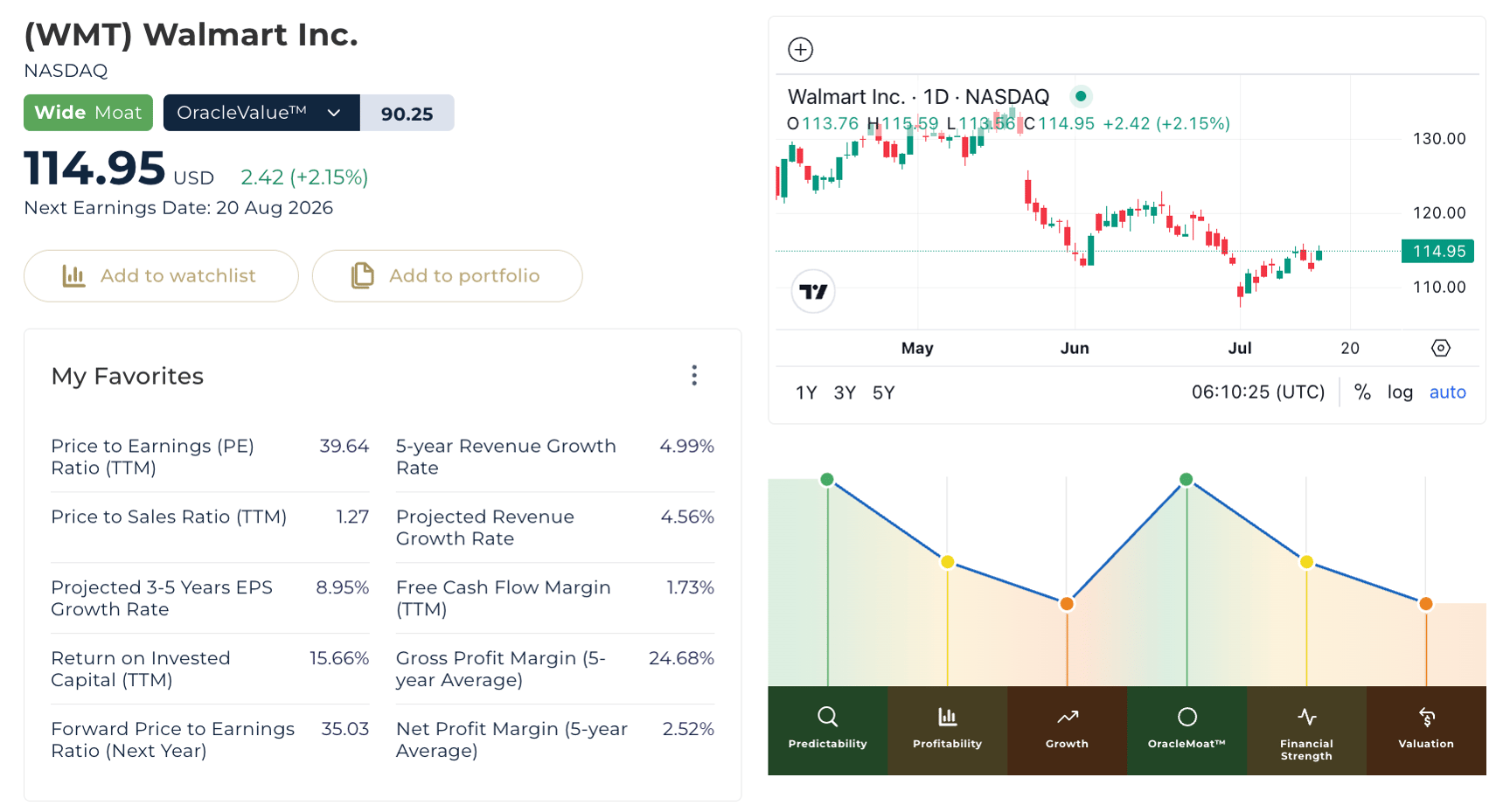
WMT Price & OracleValue™ Overview — Powered by StockOracle™ Accurate as of 17 July 2026
That framing matters because the debate on Walmart has quietly flipped. For most of its history, investors argued about the business margins, e-commerce losses, whether it could ever fend off Amazon. Today the business barely gets questioned. The argument has moved entirely to the price tag.
What Is Walmart's Intrinsic Value?
Intrinsic value is what a business is actually worth based on the future cash it can generate, not what the market is willing to pay for it on any given day. When the market price sits below that estimate, investors call the gap a margin of safety. When it sits above, the price is leaning on growth that hasn't shown up in the numbers yet.
Walmart's Intrinsic Value: The OracleValue™ Estimate
Using its proprietary model, StockOracle™ estimates Walmart's intrinsic value at $90.25 per share.
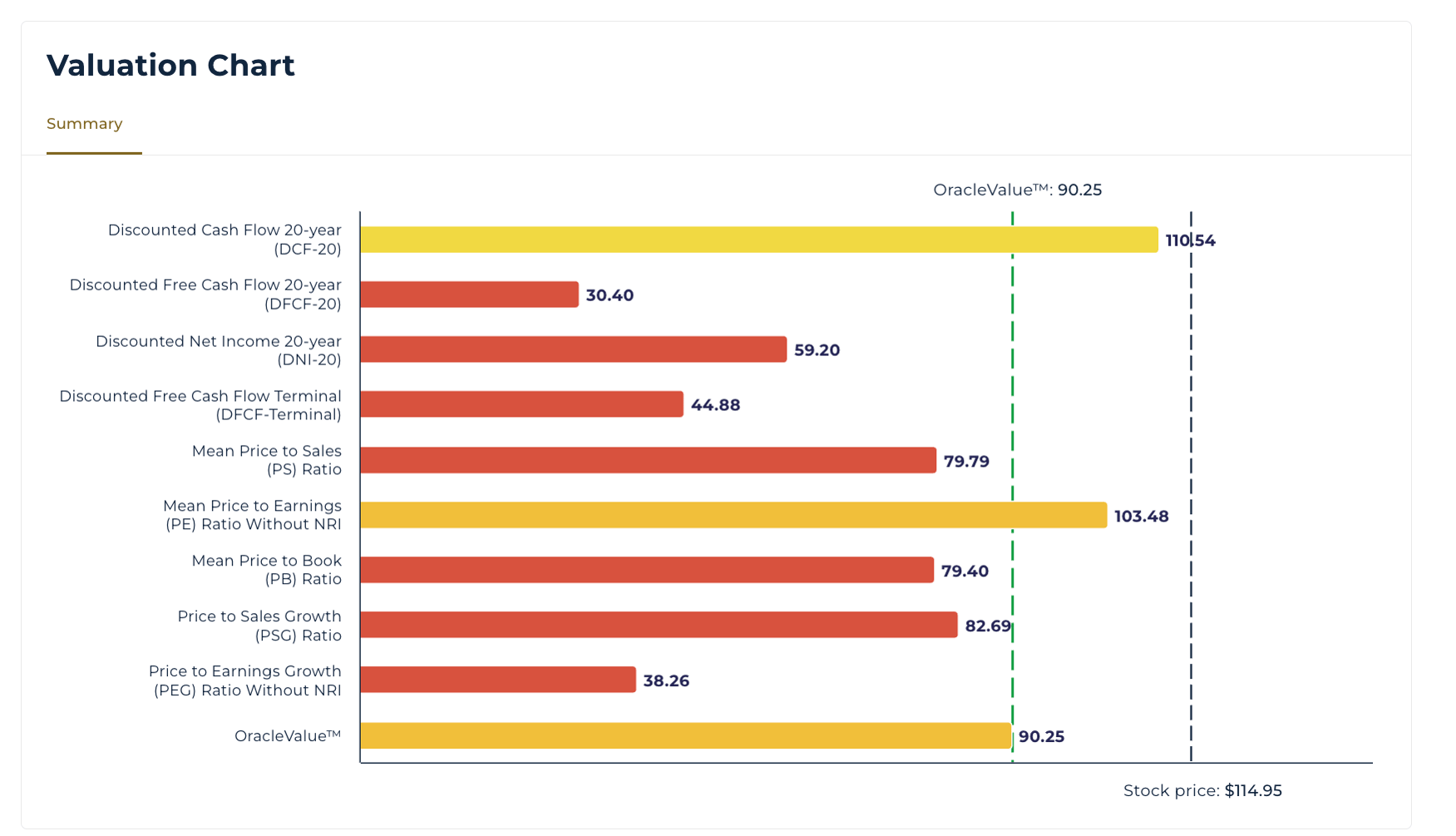 Run Walmart through a pure free-cash-flow model and the estimates come out even lower. The 20-year discounted free cash flow method lands around $30, and the terminal free cash flow method around $44. Run it through an earnings lens instead and the numbers jump, the 20-year discounted cash flow method lands near $111, and the mean price-to-earnings method near $103.
Here's the simple explanation. Walmart is a company that reports strong and growing earnings, but converts a thin slice of its enormous revenue into free cash.
So the model decides the story you tell and that split is the entire reason Walmart's valuation is contested rather than obvious.
Walmart (WMT) Financial Performance
Revenue: Scale That Keeps Compounding
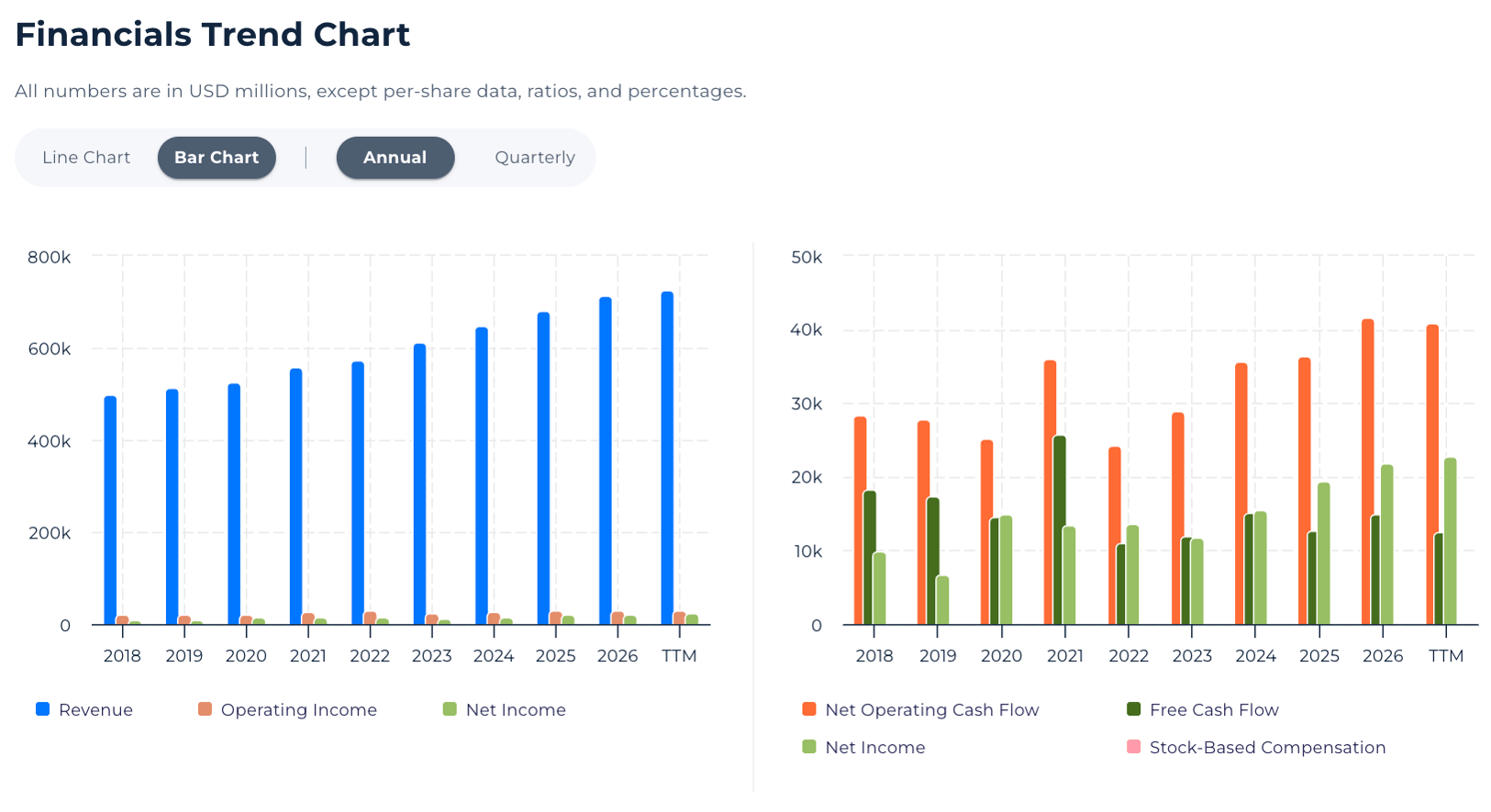
WMT Revenue Trend — Powered by StockOracle™ Accurate as of 14 July 2026
Walmart generated roughly $713 billion in revenue in fiscal 2026, up about 4.7% year-over-year, with the trailing-twelve-month figure now above $725 billion. For a company already the size of a small national economy, mid-single-digit growth is less about finding new customers and more about selling more to the ones it already serves.
The mix underneath that number is what's changed. Walmart U.S. still drives the majority of sales, but the fastest-growing pieces such as digital, third-party marketplace, advertising carry structurally higher margins than moving pallets of groceries. That's the "second P&L" the bulls keep pointing to.
Free Cash Flow: The Line That Decides the Valuation
Intrinsic value models are ultimately a bet on one number: how much cash a business throws off, year after year, after paying for everything it needs to keep running and growing. For Walmart, that number is the crux of the whole debate.
Walmart's free cash flow margin is roughly 1.7% of revenue on a trailing basis. This means the business keeps under two cents of free cash for every dollar of sales. That's the mechanical reason a pure free-cash-flow model values Walmart so far below its market price: running the world's largest store network and fulfillment operation is capital-hungry, and heavy reinvestment eats into the cash left over.
Returns on Capital: The Quiet Improvement
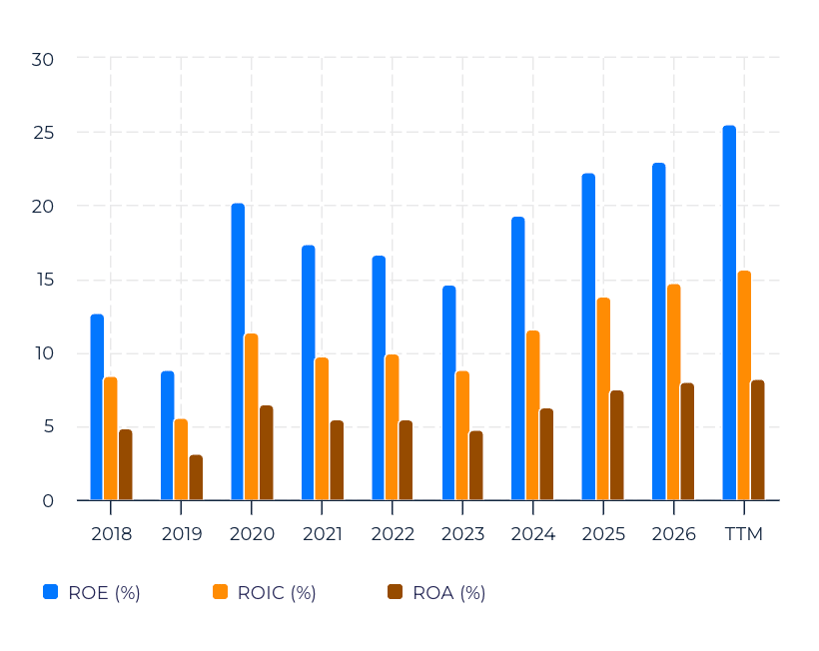
Margins and Returns Trend — Powered by StockOracle™ Accurate as of 14 July 2026
Underneath the valuation noise, Walmart's capital efficiency has been trending the right way. Return on equity, return on invested capital, and return on assets have all climbed over the past several years, with ROIC now in the mid-teens. Rising returns on capital signal a business extracting more profit from each dollar it deploys. A sign that the mix shift toward digital and advertising is doing real work, not just padding the top line.
Shareholder Returns
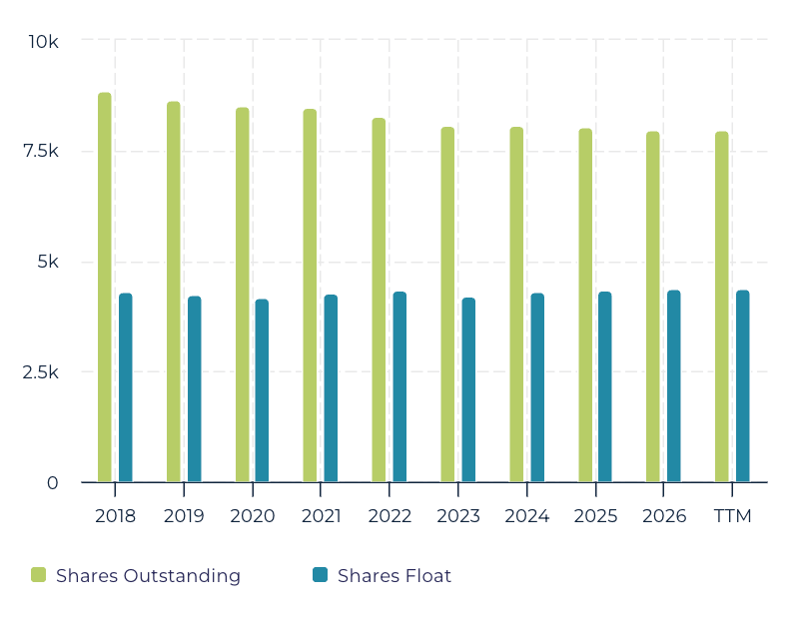
Walmart has continued to return capital through a large multi-year buyback authorization.
When a company repurchases its own shares, each remaining share owns a slightly larger piece of the business. A modest but steady tailwind to per-share value, provided the shares aren't being bought at inflated prices.
Walmart (WMT) Growth Catalysts
The premium in Walmart's stock isn't priced on groceries. It's priced on the businesses growing around the groceries the ones that could bend the margin curve over the next decade.
- Walmart Connect (advertising) — the retail-media arm has been growing well ahead of the core business, monetising Walmart's customer data and traffic at software-like margins.
- Marketplace and third-party sellers — expanding assortment and fee income without taking on inventory risk.
- Membership (Walmart+ and Sam's Club) — recurring, high-retention revenue that deepens customer stickiness.
- International and Flipkart — exposure to India's fast-growing e-commerce market and other emerging regions.
- E-commerce profitability — U.S. online operations reaching profitability changes the unit economics of digital growth.
Why it matters for valuation: each of these carries a materially higher margin than Walmart's core retail. If they compound fast enough to become a meaningful share of profit, the free-cash-flow picture that currently drags the valuation down begins to invert.
Economic Moat: Why Walmart's Advantage Is Structural
Walmart carries a wide moat, and it's built on things that are genuinely hard to replicate:
- A cost and scale advantage that lets it price lower than almost anyone and still make money.
- A logistics and store network dense enough to reach the vast majority of U.S. households for same-day delivery — a physical footprint that doubles as a fulfillment grid.
- Purchasing power over suppliers that few retailers on earth can match.
- A trusted low-price brand that becomes more valuable, not less, when consumers are stretched.
Amazon owns a deeper e-commerce and cloud-funded flywheel that lets it subsidise retail. Costco commands ferocious membership loyalty and inventory discipline. Aldi runs a leaner private-label cost structure in price-sensitive segments.
Walmart's job was never to copy any of them; it's to defend a position none of them can attack from every side at once.
Building Your Own DCF: What Has to Go Right
When a stock trades at a premium to most fair-value estimates, the productive exercise shifts: stop asking "is it cheap?" and start asking "what story must the numbers tell to justify this price?"
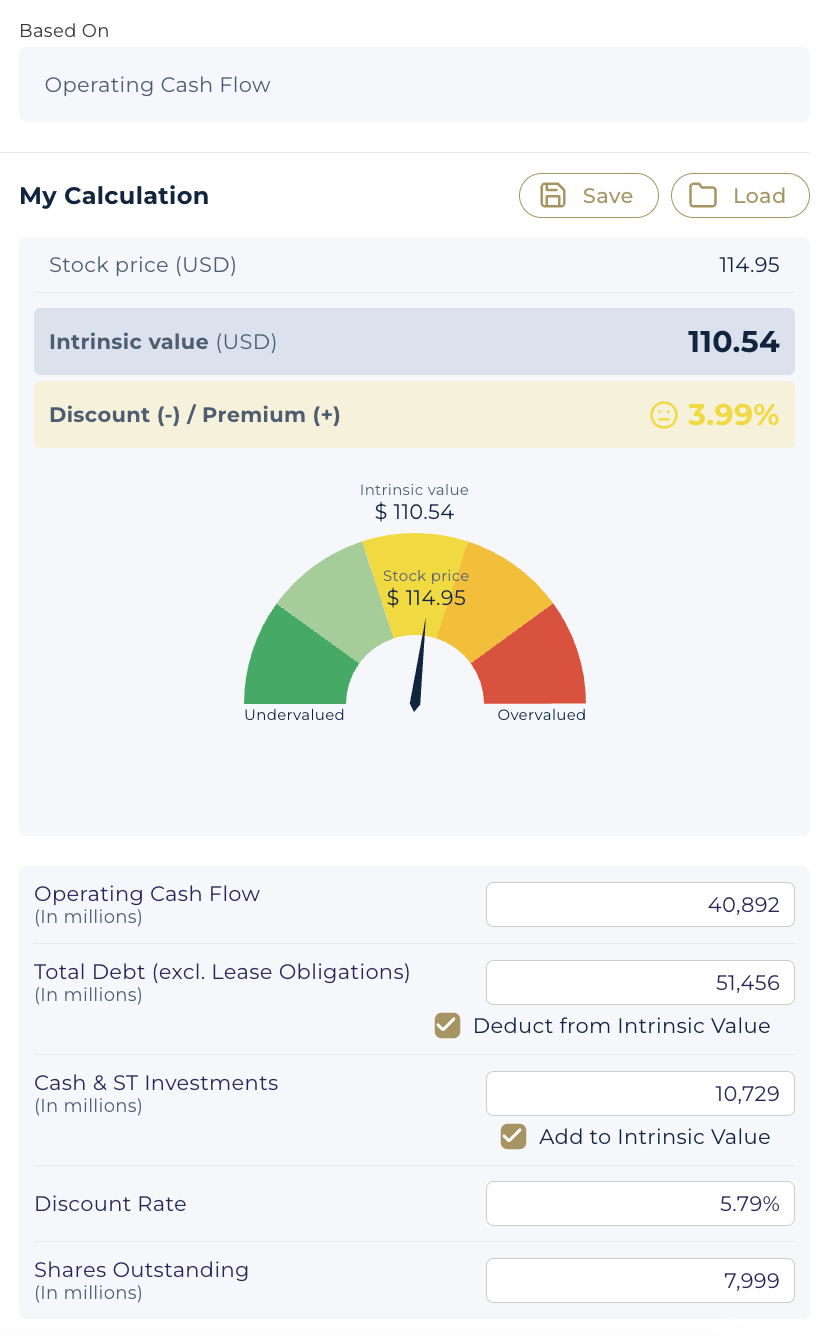
Compare other consumer and retail companies' intrinsic value against their current price with a free StockOracle™ trial.
Final Thoughts on Walmart's Intrinsic Value
The market isn't debating whether Walmart is a great company, it is. The debate is whether the price already assumes a transformation that is still, financially, a work in progress.
If free cash flow margin expands as the digital and advertising layers scale, intrinsic value could trend higher and the premium starts to look justified. Until then, Walmart carries a simple mandate familiar to any premium-priced stock: keep converting the story into cash, quarter after quarter.
This analysis is shared for educational purposes and is not intended as financial advice or a recommendation on any investment. OracleValue™ is an estimate and should not be taken as a signal to buy or sell. Any past performance mentioned is not indicative of future results.